Pakistan’s Shameful Showing At The Asian Games In Japan Who Is Responsible?
- 10 Oct - 16 Oct, 2026


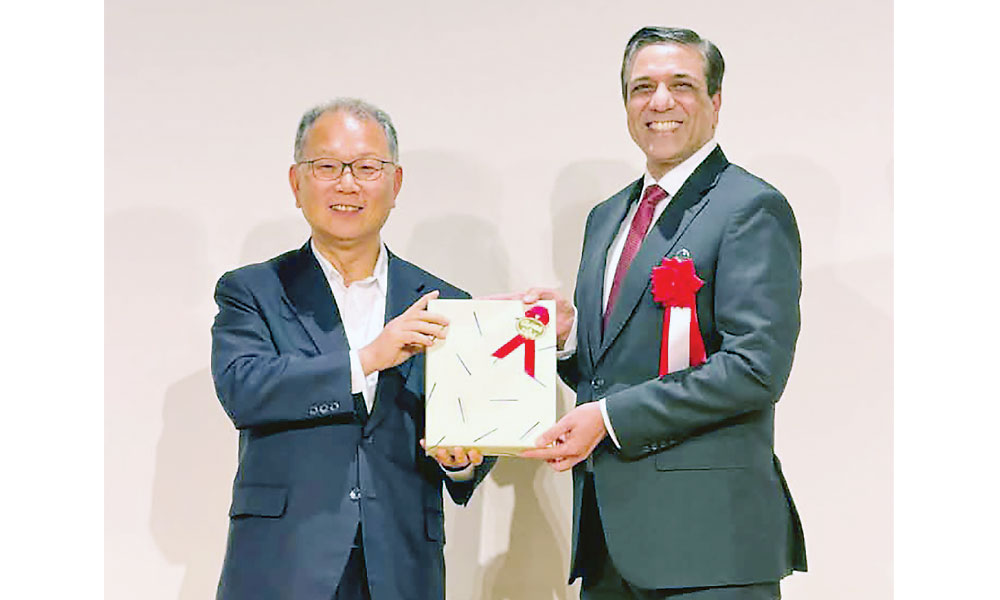
Ambassador Abdul Hameed and a More Responsive Face of Pakistan in Japan.
The success of an ambassador cannot be measured merely by the number of ministers he meets, ceremonies he attends, or photographs that appear in newspapers. The more meaningful questions are different: What did his presence achieve for his country? Did political understanding deepen? Did trade and investment find new avenues? And did citizens living far from home feel that their embassy stood beside them when they needed it most?
Measured against these standards, Pakistan’s Ambassador to Japan, Abdul Hameed, represents an encouraging model of diplomacy that is both purposeful and humane.
An ambassador’s foremost responsibility is to protect and advance his country’s national interests. This means building relationships with government, parliament, business leaders, investors and institutions, while creating opportunities for trade and economic cooperation. Yet diplomacy also has a quieter responsibility: caring for the citizens whose passport the ambassador represents.
A recent incident in Japan illustrates this dimension better than any formal speech.
A Pakistani citizen was travelling to Pakistan with his Japanese wife on an important journey. At the airport, they discovered that her Pakistani visa had expired. Under the rules, she could not travel. The flight was approaching, the journey was important, and the possibility of losing both the flight and the tickets was becoming very real.
The Pakistani citizen contacted the Embassy.
When the matter reached Ambassador Abdul Hameed, it did not disappear into the slow corridors of routine procedure. He recognised the urgency and acted. The relevant officials were mobilised and, within approximately twenty minutes, arrangements were made for the Japanese spouse to receive the necessary visa. She was able to board her flight and continue her journey to Pakistan.
In the vast landscape of international diplomacy, this may appear a small episode. Yet small acts often leave lasting impressions.
For that Japanese woman, Pakistan was represented that day not by a diplomatic reception or an official speech, but by the responsiveness of its embassy. For Pakistanis living in Japan, the incident carried an equally important message: their embassy could be accessible when circumstances genuinely demanded help.
That, too, is diplomacy.
Abdul Hameed’s responsibilities, however, extend far beyond community affairs. A particularly important aspect of his work has been the emphasis on economic and commercial diplomacy.
Pakistan and Japan share decades of goodwill, but friendship between nations must ultimately produce tangible benefits. It must be translated into trade, investment, technology, industrial cooperation, employment and stronger institutional partnerships.
Japan possesses capital, technological sophistication and some of the world’s most respected corporations. Pakistan offers a large market, a young population, considerable natural resources and opportunities in infrastructure, information technology, agriculture, manufacturing and other sectors. The diplomatic challenge is to bring these complementary strengths together.
Human-resource cooperation offers another promising avenue. Japan faces increasing demand for skilled workers in several sectors, while Pakistan has a large and youthful workforce. A credible bridge between Japanese labour requirements and properly trained Pakistani professionals could eventually create opportunities for thousands of Pakistani families. Strengthening cooperation in skills development and employment should therefore remain an important diplomatic priority.
Ambassador Abdul Hameed has also played a significant role during high-level Pakistani engagements with Japan, including the visit of Punjab Chief Minister Maryam Nawaz Sharif. The true value of such visits lies not in protocol or ceremonial meetings, but in what follows: investment opportunities, institutional partnerships, technological cooperation and sustained contact between decision-makers. An effective embassy ensures that the momentum created by a high-level visit continues after the delegation has returned home.
The Ambassador’s engagement with Japan’s business community reflects the same approach. On August 26, 2026, he addressed the Arai Future Vision event organised by Arai Shoji Co., Ltd. He appreciated the company’s role in connecting businesses across automobiles, commercial vehicles, construction machinery, logistics and finance, while reiterating the Embassy’s readiness to facilitate serious engagement between Japanese companies and Pakistani partners.
This is where economic diplomacy becomes meaningful. Pakistan needs Japanese businesses to look beyond old perceptions and examine the opportunities the country offers. That requires persistent engagement, credible facilitation and an embassy willing to function as a bridge.
Diplomacy, after all, is the patient art of opening doors.
Sometimes it is the door of a ministry, sometimes the boardroom of a major corporation, and sometimes it is a door that appears to be closing on a distressed Pakistani family at an airport.
A capable ambassador understands which door must be opened, when intervention is necessary, and how effectively his country’s interests must be represented.
The airport episode will probably never enter the official history of Pakistan-Japan relations. No treaty was signed, no communiqué issued and perhaps no official photograph taken. Yet the confidence those twenty minutes created in one Japanese woman, and among Pakistanis who heard her story, may be worth more than many ceremonial occasions.
For diplomacy is not conducted only between governments. At its finest, it connects nations, institutions, businesses and, above all, people.
And therein lies the value of Ambassador Abdul Hameed’s work in Japan: an effort to make Pakistani diplomacy serve both the larger interests of the state and the everyday concerns of its citizens.







COMMENTS