Pakistan’s Shameful Showing At The Asian Games In Japan Who Is Responsible?
- 10 Oct - 16 Oct, 2026



Ahmed Sultan’s petition on the Prime Minister’s desk seeks to transform Punjab’s Himmat Card Scheme into a nationwide programme.
At an age when most students are occupied with examinations and university applications, Ahmed Sultan, a high school student from Lahore, has chosen to confront one of Pakistan’s most persistent inequalities: the exclusion of millions of persons with disabilities from meaningful state support.
Sultan has been nominated from Pakistan for the 2026 United Nations Sustainable Development Goals Action Awards. His nomination was jointly submitted on behalf of the International School Lahore and the All-Pakistan Health Rights Collective, a civil society organisation he co-founded and currently leads. The recognition reflects his work in public health, social inequality and institutional reform.
Yet the initiative that has brought his advocacy to the attention of the Federal Government began with a simple question: why should financial assistance for persons with disabilities depend upon the province in which they live?
In January 2026, Sultan drafted and submitted a civil society letter to Prime Minister Shehbaz Sharif, calling for the nationwide expansion of the Punjab Government’s Himmat Card Scheme.
The provincial programme provides eligible and officially certified persons with disabilities in Punjab with a quarterly stipend of Rs10,500. For families struggling with the costs of medicines, mobility assistance, transportation and everyday care, even this modest amount can offer a measure of relief and dignity.
However, the programme ends at Punjab’s borders.
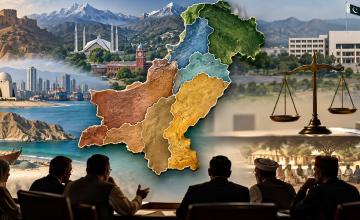
According to estimates cited in Sultan’s campaign, approximately 17 million Pakistanis with disabilities live outside Punjab. Whether they reside in Sindh, Balochistan, Khyber Pakhtunkhwa, Azad Jammu and Kashmir, Gilgit-Baltistan or the Islamabad Capital Territory, they are not eligible for assistance under the Punjab scheme.
A disability does not become less burdensome when a citizen crosses a provincial boundary. The cost of medicine does not decline in Quetta. Mobility aids do not become cheaper in Gilgit. A family caring for a disabled child in Gwadar does not face fewer challenges than a family in Lahore.
Yet Pakistan’s present welfare structure often makes geography the deciding factor between inclusion and abandonment.
Sultan’s petition asks the Prime Minister to address this disparity by constituting, through a decision of the Federal Cabinet, a National Himmat Card Programme covering every province and territory of Pakistan. The proposed programme would extend financial assistance to eligible persons with disabilities throughout the country, including those living in Azad Jammu and Kashmir, Gilgit-Baltistan and the federal capital.
Prepared in collaboration with legal experts, the petition also presents a constitutional basis for federal action. It refers to Article 90 of the Constitution, under which the executive authority of the federation is exercised by the Federal Government through the Prime Minister and Cabinet. More importantly, it invokes Article 38(d), a Principle of Policy that places an obligation upon the State to provide the basic necessities of life to citizens who are permanently or temporarily unable to earn a livelihood because of sickness, infirmity or unemployment.
The petition is therefore not merely an appeal for compassion. It is an argument about citizenship, constitutional responsibility and equal treatment.
The campaign has been opened to public signatories through online platforms and has attracted support from citizens and organisations. Each signature strengthens a demand that should never have been controversial: disability welfare must not be treated as a provincial privilege when the hardship itself is national.
The intellectual foundation of the campaign was set out in Sultan’s June 2026 essay in The Express Tribune, titled “The Punjabi Oligopoly: The Geography of Pakistan’s Welfare Divide.” In the essay, he examined how welfare resources have become concentrated through a combination of fiscal distribution, political representation and administrative capacity. He discussed the mechanics of the 7th National Finance Commission Award, Punjab’s political weight in the National Assembly and evaluations of the Benazir Income Support Programme.
Using the World Health Organization’s disability prevalence estimates alongside Pakistan’s 2023 census population, Sultan estimated that between 17 million and 18 million persons with disabilities live outside Punjab. Despite the scale of this population, no comparable financial assistance programme offers them the protection available under the Himmat Card Scheme.
The essay concluded with a sentence that has since become the moral centre of his campaign: “The men and women in Quetta, in Skardu, and in Gwadar are not asking for charity; they ask only for the country to count them.”
Those words capture the difference between charity and rights.
Charity depends upon sympathy and may be withdrawn at any time. A right, however, belongs to a citizen by virtue of citizenship. Persons with disabilities do not need occasional gestures of kindness. They require durable public policies, accessible institutions and a welfare system that recognises their dignity.
Through the All-Pakistan Health Rights Collective, Sultan and his colleagues work on public health issues through petitions, published research and awareness campaigns. The National Himmat Card campaign is currently the organisation’s largest initiative. The collective is also one of the two institutions through which Sultan was nominated for the SDG Action Awards.
His academic interests complement his public advocacy. Sultan is interested in translational neuroscience, particularly the gap between scientific research and the clinical realities faced by patients in under-resourced communities. He has conducted biology research at Harvard Medical School and the Broad Institute of MIT and Harvard in Cambridge, Massachusetts. He also continues to participate in neurological research at King Edward Medical University in Lahore.







COMMENTS