The Many Notes Of Fariha Pervez
- 10 Oct - 16 Oct, 2026


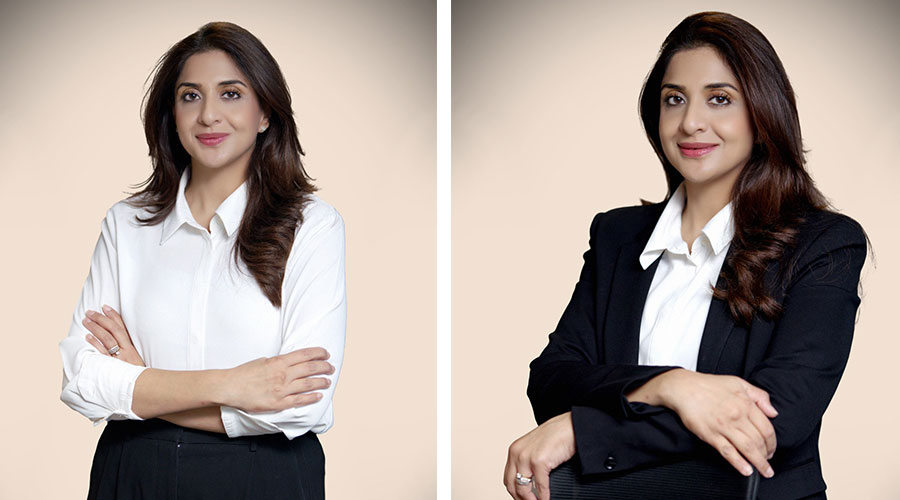
Aleena Tanvir has worked across the telecom, FMCG, financial services, and development sectors, building experience in human resources, people strategy, organizational culture, and employee development. She currently serves as Chief People Officer at a bank, where her responsibilities include people strategy, workplace culture, and employee experience.
In this conversation, Tanvir discusses the challenges of building effective people strategies across industries, addressing gender pay gaps, creating more equitable workplaces, and rethinking traditional ideas of leadership. She also reflects on the barriers women face in professional environments and the relationship between work and personal life.
MAG: You've moved between telecom, FMCG, and now banking. What's the common thread in how you approach “people strategy” across such different industries?
AT: I think the most common thread is that people are the same everywhere. Whether you're in FMCG, banking, or telco, everyone wants a place where they not only work but thrive, where the culture is good, and where their performance is recognized. So, in my view, the needs of humans always stay the same.
For me, the real marker of success is how well you can align the “people strategy” with the “business strategy,” and for that you need to have the lens of the industry you are working in. The business goals and impact of a telco are different from those of a bank; therefore, you have to tailor your approach accordingly.
MAG: When it comes to workplace culture and diversity, equity and inclusion, what changes actually make a difference to employees beyond awards and recognition?
AT: I look at it this way: how safe do our colleagues feel coming to work? Can they perform well? What opportunities are they being given? What do the policies actually look like? How is leadership behaving, and are we holding them accountable? These are the questions that matter to me.
We never chased certifications; we only worked on making the workplace better for our employees. The recognitions, certifications, and awards are just outcomes, byproducts of that focus. They only tell us that we are moving in the right direction, nothing more. The real accomplishment is the impact on the ground.
What we really want is for people to have an overall experience of working in an environment where they feel safe and accepted, backed by real policies around accountability and leadership behavior. And on the ground, all of this has genuinely shifted.
At the end of the day, the biggest win for me is seeing an employee walk into work happy; when that happens, they perform well, and everything else just falls into place.
MAG: Gender pay gaps close for different reasons in different places – sometimes through real structural fixes, sometimes through changes in hiring composition. How do you make sure it's the former in your organization, and why does that distinction matter to you?
AT: It's an agenda very close to my heart. I will put it this way: “You can't fix something you can't measure.” At the bank, we sit down every single month and look at the numbers to see if there are any gaps we still need to close.
If you leave it alone hoping it will sort itself out, it won't. You have to be gender-intentional in your policies, practices, and measurement. It all comes down to intention. We won't be able to move the needle if we leave it to the universe and assume it can't happen.
MAG: Are there specific initiatives around the gender pay gap that you're especially proud of?
AT: Yes; we measure it, and we try to close every gap we find. One thing that I'm proud of: we used to think our gender pay gap was zero, until we realized we were including the special travel allowance women receive – meant to offset transport issues and lack of facilities – as if it were regular pay. That wasn't fair, so we stripped it out and did the real work of achieving true pay parity, instead of inflating numbers just to tick a DEI box. We still track it closely, every month.
We've also overhauled policies around enablement, transport, daycare, miscarriage, and adoption. But beyond policy, it's about opportunity: the conscious effort here is that gender should never factor into how you're regarded. Your skills should speak for you, not your gender.
We've also introduced a returnship programme for women at Mobilink Bank and are preparing a female sales training initiative, since sales remains a male-dominated space with real barriers for women. The aim is to train women specifically for sales roles and create greater access to opportunities in that area.
MAG: If you had to pick one HR practice that's common in Pakistan but that you think is actually counterproductive, what would it be and why?
AT: I'd point to a structural problem more than a single practice. In Pakistan specifically, a lot of outcomes are driven informally, with a lack of proper processes. I firmly believe in the power of having proper structuring and processes, and automating them for everything to run smoothly and fairly for the entire organization and its people.
The second issue is that the “people function” isn't very data-driven. It's far too subjective, and that's something the entire HR community needs to work on. How do you actually use the right data to build a business case? So, it's not about an existing bad practice; it's more about lacking a good one.
MAG: How has your own definition of what makes a “good leader” changed between your first HR role and sitting in a Chief's seat today?
AT: A lot. When I started out, I linked leadership to power, position, and influence. I thought a leader had to be “all-knowing” – someone who has an answer for everything. I've completely flipped that definition since. A leader for me now is someone who asks the right questions and can admit when they don't know something. A strong leader is vulnerable and carries an element of humility.
MAG: As a woman who has reached one of the highest leadership positions in human resources, were there moments when you had to challenge stereotypes or break through invisible barriers? What did those experiences teach you?
AT: To all the women out there, there will be times when you won't be given space at the table, whether it may be in a conversation or especially in decision-making. The responsibility for that usually lies with leadership and the environment, but it lies partly with us, women, too.
As women, we carry a lot of self-limiting beliefs; we question ourselves more than we need to, and we sometimes choose to stay out of the room ourselves. We are simply too hard on ourselves. So, if you know your craft, then you don't have to be shy about asking or claiming your right.
MAG: How do you keep a balance between your personal life and your work?
AT: There is no perfect formula for work-life balance, and I believe the pursuit of one can sometimes make the challenge harder. What can genuinely help more is creating harmony between the two.
There will be times when work needs more from us, and times when life does. The real test is whether both can flex when it matters, without people feeling they have to choose one at the expense of the other. That only works when trust, empathy, and flexibility are built into the culture. People should be able to step away when life or family requires their attention, knowing they will be supported fully.
For leadership, this comes down to intent. When empathy is practiced consistently and flexibility is treated as part of how an organization operates, integration stops feeling like a compromise. It becomes part of a healthier, more sustainable way of working.









COMMENTS