WHEN THE JOKE WAS ON ME PRANKS, PANIC AND UNEXPECTED TROUBLE
- 26 Sep - 02 Oct, 2026


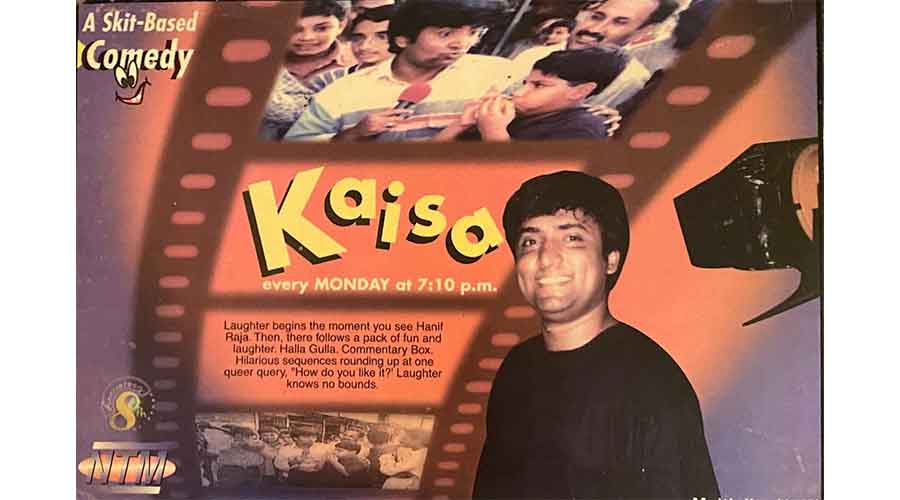
“Kaisa” was Pakistan’s first prank show, and it was my creation. I conceived the central idea, wrote the scripts and directed the programme. I have spoken about “Kaisa” on television several times over the years, but I now want to put its story down on paper for readers.
Hidden-camera pranks and candid-camera shows had already become popular in several countries. In 1991, when I first travelled to the United States in connection with a stage play, I watched a candid-camera show on television and an idea immediately struck me: why not create something similar in Pakistan?
I finally got that opportunity in 1996 on NTM, Pakistan’s first private television channel.
I borrowed only the basic concept of hiding the camera and playing a prank from Western television. Everything else about “Kaisa”—its segments, ideas and execution—was my own creation. Western candid-camera shows generally did not rely heavily on dialogue, while some of their pranks were also incompatible with our Eastern values. I wanted “Kaisa” to be different. I created pranks in which sound and dialogue were an integral part of the experience. Recording pranks with sound presented its own challenges.
By then, I had already appeared in several PTV serials and shows since 1991 and had written comedy sketches and scripts for programmes I hosted. I had therefore developed a reasonable degree of recognition among television viewers. But “Kaisa” took that recognition to another level and gave me nationwide fame.
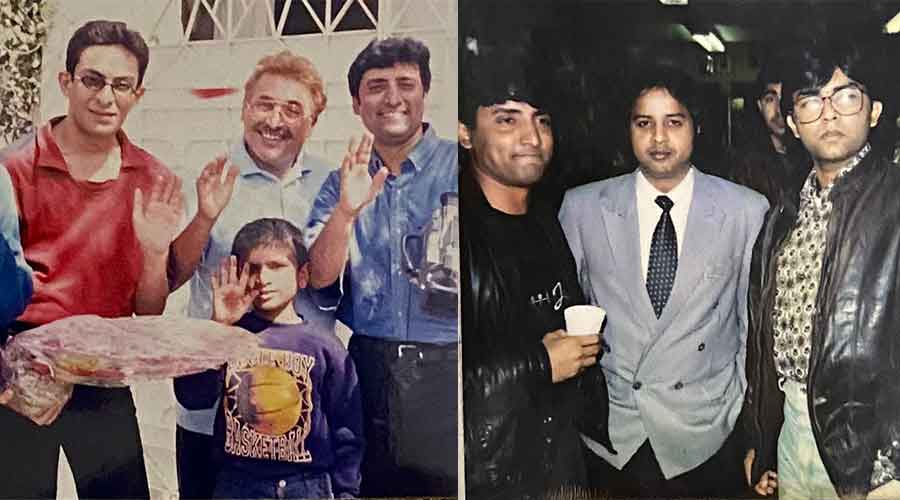
With PTV serials and shows, it usually took three or four episodes before a programme began receiving a noticeable public response. “Kaisa” was different. When the very first episode went on air, the landline telephone at the station started ringing continuously during the commercial breaks. The calls continued even after the programme ended, with viewers calling to express their appreciation.
By the following day, “Kaisa” had become a popular show because of its originality and unconventional ideas.
In November 1996, while recording “Kaisa” in Karachi’s Tariq Road, Clifton and Defence areas, I had one lingering concern: would Pakistani audiences understand the concept of a prank show?
Before production began, some people at the production house had argued that the person being pranked needed a certain level of tolerance—and that Pakistanis supposedly lacked it. That was one reason I included a public game-show segment and a parody segment at the end of the programme.
My own observation was different. I believed Pakistani audiences were intelligent enough not only to understand pranks but to enjoy them. The enduring popularity of “Kaisa” proved that instinct was right.
Over the years, television channels in Pakistan and India, and later YouTubers on social media, have copied the pranks and even the scripts of “Kaisa” and its successor, “Chhup Chhupa Ke”. Some have reproduced them almost word for word, often in a crude manner. I, however, never compromised on decency while creating a prank.
That is why whenever a YouTuber performs a similar prank today, viewers are quick to say, “This is a copy of Hanif Raja’s ‘Kaisa’.”
The second version of “Kaisa” was “Chhup Chhupa Ke”, which I launched in 2004 on a private satellite television channel. It remained on air for almost a decade. I eventually decided to end the show myself when I began preparing a talk show for another private channel. I will come to “Chhup Chhupa Ke” and the many stories associated with it later.
“Kaisa” was already a new experiment for television, but within the programme I introduced several other experimental ideas. For example, I would disguise myself and personally prank members of the public. In one memorable prank, I disguised myself as a nurse at a hospital.
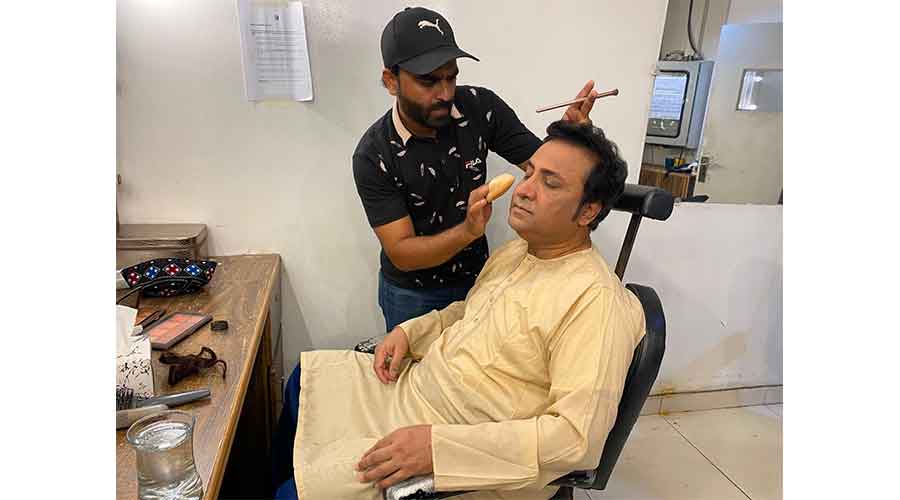
Another popular idea was to transform well-known celebrities, change their appearance completely and send them into public places to perform the prank themselves. The list included singer Sajjad Ali, actors Adnan Siddiqui, Ismail Tara and Zeba Shehnaz, singer Ali Haider and actress Mishi Khan, among others.
Another segment involved pranking prominent film, television and stage actors and singers. Some artists initially took offence, but once “Kaisa” became a sensation, major celebrities began asking to be pranked because of the programme’s enormous viewership.
One memorable prank was with the late actor Fareed Nawaz Baloch, father of actor Yasir Nawaz. After the prank was broadcast, I met him the following day at PTV Karachi Centre.
He made a remarkably candid admission. Although he had appeared in countless television serials, he said the response and viewership generated by his appearance on “Kaisa” were unprecedented in his career.
Writing the first episode was one thing. Turning those ideas into successful television segments was an entirely different challenge.
I had already recorded some of the public pranks on the streets, but after reviewing the footage, I noticed certain shortcomings and decided to shoot some of them again. I have never believed in compromising on quality, so I continued recording until I was satisfied with the results.
The next challenge was the celebrity prank. At that stage, “Kaisa” was still largely a concept on paper. I needed to find a celebrity willing to completely change his or her appearance and go out into public to perform a prank that would eventually be broadcast on television. Singer Sajjad Ali was a close friend of mine. He is highly creative and has an excellent sense of humour.
This was November 1996. Two years earlier, in 1994, Sajjad Ali, singer Tahseen Javed and I had successfully toured the United States for a show, which had brought Sajjad and me even closer.
I went to Sajjad’s house and explained the concept of “Kaisa” and the particular segment I wanted him to do in disguise. After hearing the idea, Sajjad stared at me with a serious, almost angry expression. For a moment, I thought I had offended him. Then his expression suddenly changed.
“Hanif, this is such an original idea. Don’t tell anyone about it. Someone will steal it.”
Those were Sajjad Ali’s exact words. I had Sajjad disguised as a street vendor selling combs, hairpins and drawstrings—the kind of vendors commonly seen in shopping centres.
We darkened his complexion, dressed him in worn-out, dirty clothes and gave him a broken shoe. Then we headed to a shopping centre in Clifton to record the prank.
Sajjad approached women and tried to persuade them to buy combs, hairpins and other small items. Meanwhile, I sat at a distance with my team, capturing everything through the hidden camera.
Sajjad is not only a gifted singer but also a superb performer. He changed his voice completely, pleading with customers in a soft, almost whining tone and dramatically begging them to buy his merchandise. I was laughing uncontrollably as I watched him perform.
Some women took pity on him and bought something. Others, having no idea who he really was, firmly told him off. Then an elderly woman shopping with her two daughters suddenly recognised him.
“I think that’s the singer Sajjad Ali,” she told her daughters.
They immediately dismissed the idea.
“Ammi, what are you talking about? Sajjad Ali is a huge star. Why would he sell combs, hairpins and drawstrings—and dressed like this?”
The family later told me this story, laughing, after we revealed that it had all been a prank.
At the time, Sajjad Ali’s song “Bas Bhai Bas, Zyada Baat Nahin, Chief Sahib” was extremely popular. For the parody segment at the end of “Kaisa”, I created a parody of that very song. It tied in perfectly with Sajjad’s appearance and helped make the first episode an instant sensation.
During the run of “Kaisa”, I eventually pranked almost every major celebrity in Pakistan’s entertainment industry. Among the prominent film personalities were Rangeela, Mustafa Qureshi, Izhar Qazi, Reema, Rambo, Syed Noor, Resham, Jia Ali, Saud, Khalid Saleem Mota and Syed Kamal.
Among television stars were Humayun Saeed, Bushra Ansari, Faisal Qureshi, Behroze Sabzwari, Nida Yasir, Yasir Nawaz, Junaid Jamshed, Amjad Sabri and Nabeel Zafar. And that is only a selection. The complete list is much longer.
If I were to recount the entire story of “Kaisa” and “Chhup Chhupa Ke”, along with all the incidents and behind-the-scenes stories associated with them, it would easily fill several hundred pages. For now, I will share some of the more memorable episodes.
In the second episode of “Kaisa”, I transformed actress Mishi Khan into an evening newspaper vendor. She even wore a fake moustache. I told her, “Mishi, if you hadn’t skipped the beauty parlour for a week, you wouldn’t have needed the fake moustache in the first place.”
Mishi gave an excellent performance. Carrying a bundle of evening newspapers, she walked through the markets loudly announcing completely fabricated headlines in the exaggerated style of street newspaper vendors.
People were left utterly confused. Some thought the moustached boy looked remarkably like Mishi Khan, while others wondered whether it was actually her or simply someone who looked like her.
That confusion was precisely what I wanted. The essence of a celebrity prank was to make people question what they were seeing. In another “Kaisa” prank, I transformed singer Tahseen Javed into a petrol-pump attendant. He performed the role brilliantly—and narrowly escaped getting beaten up in the process.
On another occasion, I disguised myself as a railway porter at Karachi Cantt Railway Station and attempted to sell tickets on the black market. The police caught me and I ended up being beaten as well.
How I escaped that situation—and the many other stories from “Kaisa” and “Chhup Chhupa Ke”—will be part of the next instalment.
(To be continued)





COMMENTS