What’s to watch on Netflix?
- 10 Oct - 16 Oct, 2026


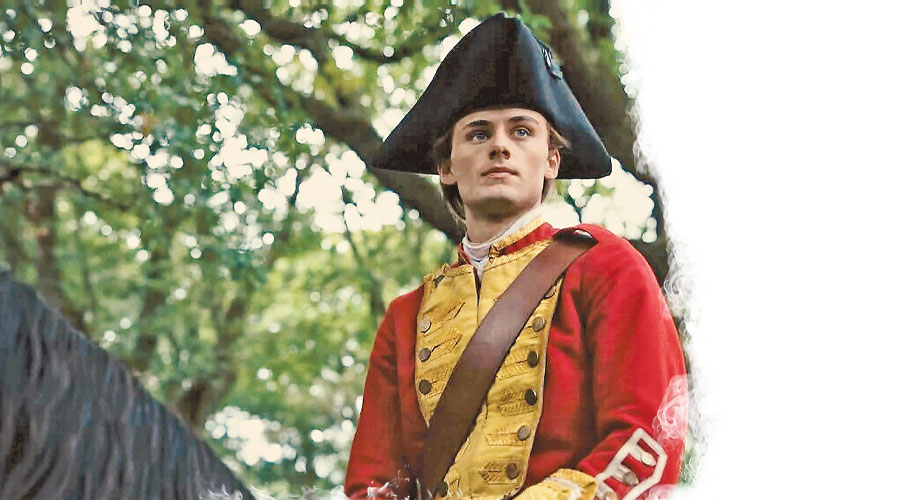
Released during the United States’ 250th anniversary year, Young Washington explores the formative years of George Washington, long before he became the nation’s first president. Produced by Angel Studios, the historical drama focuses on Washington’s early adulthood during the French and Indian War, presenting a coming-of-age story about ambition, responsibility and the experiences that shaped one of America’s most influential figures. While not groundbreaking, the film offers a thoughtful and accessible portrait of a young man learning to navigate a society defined by class, privilege and political ambition.
Set around 1755, the film stars William Franklin-Miller as Washington in his early twenties. Raised on a Virginia farm by his widowed mother, Mary Washington, played by Mary-Louise Parker, George dreams of becoming a commissioned British military officer. Intelligent, disciplined and physically capable, he possesses many qualities of a natural leader but quickly discovers that talent alone cannot overcome the rigid class divisions of colonial society. His modest background and lack of influential connections repeatedly limit his opportunities.
Washington’s difficult upbringing plays an important role in shaping his character. After his father’s death when he was eleven, he remains on the family farm rather than receiving a formal education, helping support his family and estate. Determined to improve his social position, he eventually attends an elite gathering hosted by wealthy relative Lord Fairfax, played by Kelsey Grammer. Initially denied entry because of his status, Washington perseveres, eventually securing an audience with Fairfax and earning an introduction to Virginia Lieutenant Governor Robert Dinwiddie, portrayed by Ben Kingsley.
Dinwiddie appoints Washington to the Colonial militia rather than the British Army, making clear that colonial officers are considered inferior to their British counterparts. Washington nevertheless accepts the assignment, demonstrating resilience and strategic thinking. His first major mission takes him into the Ohio Territory to negotiate with the Seneca people over growing French military influence. The expedition becomes a defining test as he faces unfamiliar terrain, political tensions and competing European and Native American interests.
One of the film’s strengths is its restrained treatment of historical complexity. Rather than judging eighteenth-century beliefs entirely through modern perspectives, the narrative largely presents colonialism, westward expansion, class inequality and sexism as realities of the period. Audiences are left to consider their implications. Washington’s confidence that the western frontier belongs to those willing to settle and develop it reflects attitudes common to the era without becoming the film’s overt political argument.
The story also introduces Sally Cary, played by Mia Rogers, as Washington’s romantic interest. Intelligent and independent, Sally questions the restrictive expectations placed upon women and resents social rituals that reduce them to potential marriage prospects. Her perspective offers a subtle examination of gender inequality while acknowledging the limitations imposed by the society in which she lives.
However, certain historical realities receive limited attention. Although the Washington family is shown to own enslaved people, they remain largely peripheral to the story. Washington’s relationship with the Seneca also occasionally leans toward a traditional “white savior” narrative, particularly as his interactions lead to acceptance as a trusted ally. These elements reveal aspects of the filmmakers’ perspective, even as the film generally avoids overt political messaging.
Directed and co-written by Jon Erwin, Young Washington maintains an efficient pace across its two-hour runtime. The screenplay balances historical context with character-driven storytelling, portraying Washington as honorable but imperfect rather than as an already-formed national hero. The film is less interested in offering a complete biography than in showing the experiences that gradually shape his leadership.
Visually, the film makes effective use of sweeping landscapes, capturing colonial America’s forests, rivers, mountains and wilderness. Outdoor sequences, particularly those involving icy rivers and harsh winter conditions, convey the physical dangers and hardships of eighteenth-century travel.
Ultimately, Young Washington participates in the tradition of American national mythmaking while acknowledging some of the contradictions surrounding the country’s founding. It celebrates perseverance, courage and leadership without presenting the era as uncomplicated. Despite Angel Studios’ association with faith-based and ideologically driven productions, the film takes a comparatively balanced approach. By focusing on Washington’s formative years rather than simply glorifying his legacy, Young Washington provides an engaging historical drama that invites reflection on both the achievements and complexities of a defining American figure.












COMMENTS