The Many Notes Of Fariha Pervez
- 10 Oct - 16 Oct, 2026


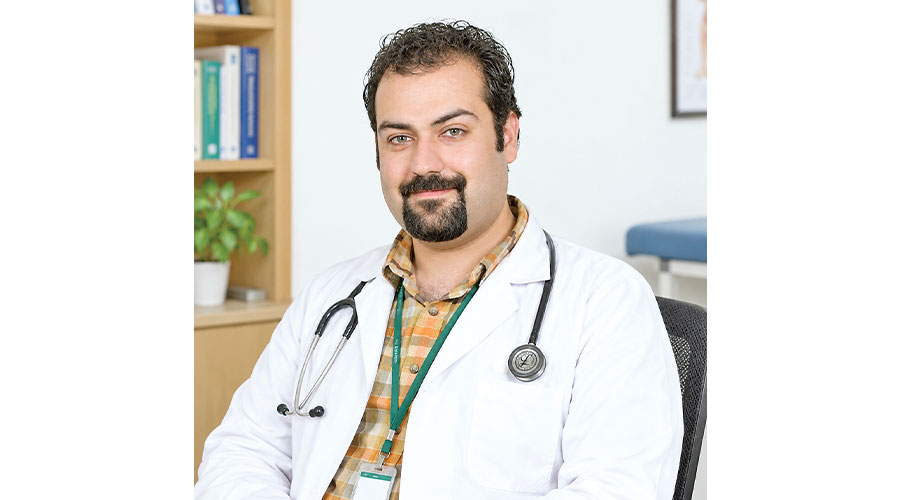
The boundary between life and death can be measured in seconds. In a remarkable emergency procedure, Dr. Abdul Salam performed angioplasty while continuous CPR was being administered to a patient whose heart had stopped. In this interview, Dr. Salam explains the decision, challenges and lessons from the experience.
Q: How did the idea of performing angioplasty during CPR come to you?
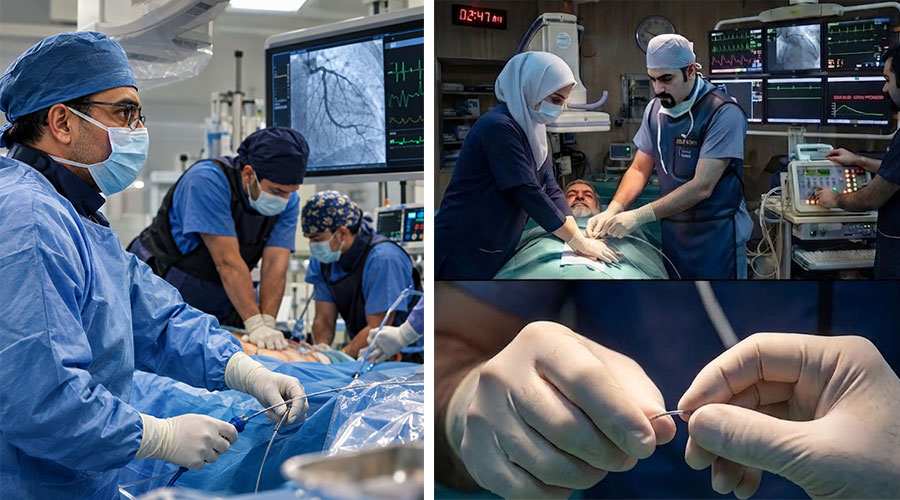
Dr. Abdul Salam: What made this case unique was that the entire angioplasty was performed while CPR was continuing. The patient had collapsed outside the catheterization laboratory and had become pulseless. Resuscitation began according to protocol, with medication and electrical shocks. When he arrived in the cath lab, the rhythm was ventricular fibrillation. Despite shocks and continued CPR, his heart did not restart.
After about 15 minutes, I realized CPR alone was not going to help. I knew the patient had suffered a major heart attack, meaning one of the heart arteries was blocked. I thought that until we opened that artery, the heart might not come back. So I made the decision to identify and open the blocked artery while the team continued CPR.
Q: What motivated you to take such an immediate and unconventional decision?
Dr. Abdul Salam: I had seen the patient in the emergency department before his condition deteriorated. He had chest pain but was conscious and asking about his treatment. I had reassured him that everything would be okay and promised that I would do my best.
When he suddenly collapsed, that promise stayed in my mind. After 15 minutes of CPR and several shocks without the heart restarting, I felt we had to think differently. We could not simply stop CPR, because interrupting it would make the chances of survival extremely low. The only option I saw was to open the artery while resuscitation continued.
Q: What were the biggest challenges during the procedure?
Dr. Abdul Salam: The unique part was not doing CPR during PCI; it was doing PCI during CPR. Normally, to begin angiography, you take access through an artery in the hand or thigh, where you locate the pulse. This patient had no pulse, so we had to find the artery and establish access almost blindly.
The second challenge was continuous chest compression. During normal angioplasty the patient is still, but here the chest and instruments were moving throughout CPR.
Radiation was another concern because the X-ray equipment remained active while the resuscitation team worked around the patient. Their arms and hands often appeared in the images, making visualization difficult.
At critical moments, such as positioning the balloon or stent, I could ask the team to pause CPR for only two or three seconds to confirm the position. Then CPR had to resume immediately. Much of the procedure depended on experience and skill when visualization was limited.
Q: What medical risks did you face?
Dr. Abdul Salam: The procedure was risky because we were dealing with a heart that was already not functioning. CPR was artificially pumping the heart, while we were simultaneously introducing catheters, wires, balloons and a stent. There was a danger of damaging or perforating the heart artery or major blood vessels such as the aorta.
After identifying the blockage, I tried to keep the intervention as focused as possible. Instead of performing extensive angiography and angioplasty, the immediate goal was simply to open the blocked artery and restore blood flow. I used a balloon and successfully opened the artery.
For a brief moment, the heart appeared to be trying to return to a rhythm. But it soon stopped again. When I looked again, I found that the treated area had collapsed and the artery had become blocked once more. A second balloon attempt did not keep it open, so I realized a stent was necessary.
Q: How challenging was placing the stent?
Dr. Abdul Salam: It was challenging. My catheter was outside the artery, and there was only a thin wire connecting the catheter to the artery. Normally, that does not provide enough support for advancing a stiff stent. I had to move the stent very slowly along the wire and into the blocked artery.
Because I could not properly visualize the exact position, I relied on the initial angiographic image and my experience. I thought it might not work, but Allah Subhanahu Wa Ta’ala made it possible. The stent reached the intended position and was deployed.
The patient then began showing signs of stabilization. Once the procedure was completed and he was stable, we obtained another image and confirmed that the stent was correctly positioned and the artery was open.
However, five to ten minutes later, the patient’s condition deteriorated again. His blood pressure and heart rate fell, and the heart stopped. I found a large blood clot inside the stent blocking the artery.
We had to repeat the procedure. The wire was taken inside again, a balloon was used to break up the clot, and blood thinners were administered. The clot was resolved and blood flow returned. It was an eventful procedure, with several moments when we feared it would not succeed. Alhamdulillah, it ultimately went successfully.
Q: Was this the first procedure of its kind in Pakistan or globally?
Dr. Abdul Salam: According to my knowledge, this was probably the only case of this kind that I had encountered. I have not seen or heard of such a procedure in my own practice or in the other hospitals where I have worked.
Normally, when a patient suffers cardiac arrest, the first priority is resuscitation. Doctors try to achieve return of spontaneous circulation, or ROSC, meaning the patient’s pulse and circulation return. Once the patient has a pulse and blood pressure, angiography and angioplasty can be performed.
In this case, we did not wait for the heart to restart. We performed PCI while CPR was still continuing. That is what made the case unusual.
Q: Could this become a new standard approach in cardiology?
Dr. Abdul Salam: I would not say it should automatically become a standard protocol. It depends heavily on the circumstances, the patient’s condition, and the operator’s skills and experience.
If a cardiologist has personally seen the patient well shortly before the arrest and knows that the cardiac arrest happened only moments earlier, such an approach may be considered by an experienced operator. But if a patient arrives pulseless and unresponsive after an unknown period outside the hospital, the situation is very different.
If the arrest occurred more than several minutes earlier, the brain may already have suffered irreversible damage. Restarting the heart alone may not be enough.
In this case, I knew the patient had been conscious and speaking to me shortly before he collapsed. The emergency team also confirmed that the collapse had happened only about a minute earlier. That made saving both the heart and the brain an urgent priority.
Q: What is your advice to young cardiologists and medical students facing high-pressure emergencies?
Dr. Abdul Salam: My advice is simple: do not give up too quickly. Under pressure, stress and fatigue, it is easy to believe that nothing more can be done. But sometimes we have to think beyond the usual approach.
During this case, the team had been performing chest compressions for a long time. Manpower was limited. People from the ICU, emergency department and other areas had already been called, but the hospital also had other patients who needed care. I could see the team becoming tired.
I kept remembering the patient and the family waiting outside. I did not want to tell them after 15 minutes that nothing more could be done. CPR and shocks were not enough, and mechanical ventilation was also arranged. Eventually, opening the blocked artery became the last resort.
We performed the procedure, and Alhamdulillah, a human life was saved. The patient is now happy, and his family is extremely grateful. The entire situation could have ended differently if we had simply stopped after conventional measures.
The lesson is to keep trying when there is a realistic possibility of saving a life. Critical decisions must still be guided by knowledge, clinical judgment, experience and appropriate patient selection. Young doctors should develop strong skills and remain prepared to think critically when standard measures are not enough.













COMMENTS