The Poetry of Festive Elegance
- 07 Nov - 13 Nov, 2026


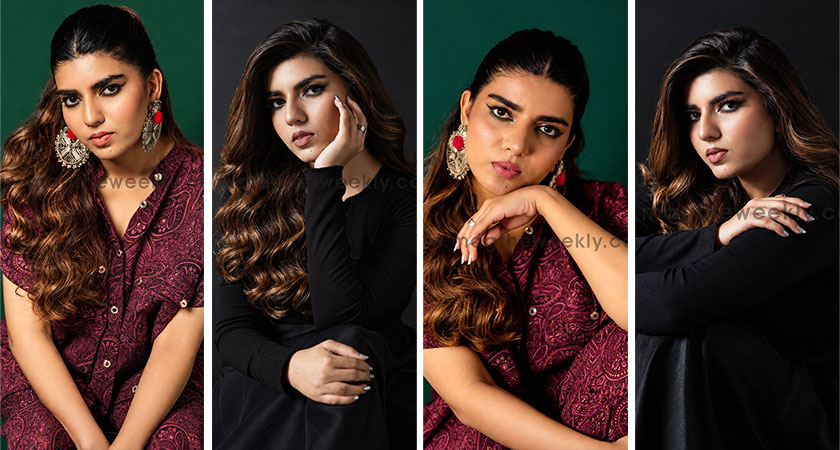
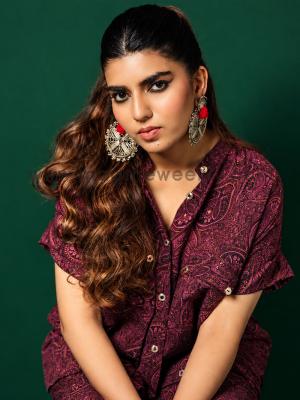
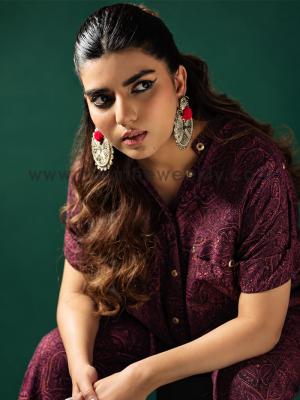
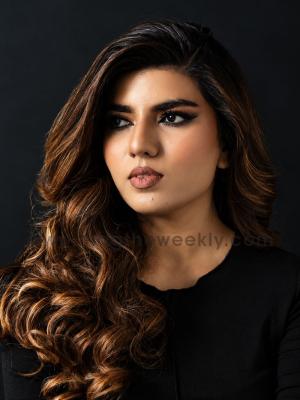
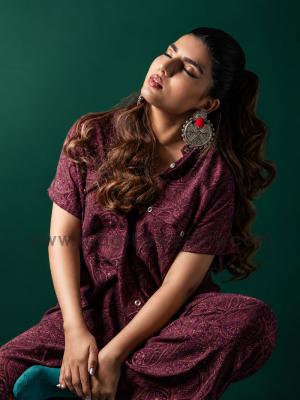
We have all seen her perform with her father, the legendary Sajjad Ali, on stage every now and then and her Coke Studio performance is probably the first thing that pops into most people’s head at the mention of her name, but Zaw Ali is much more than that. Even with great musical talent in the family (her uncle Waqar Ali being one of the most famous song producers, uncle Ejaz Haider being an extremely talented singer and now brothers in the same industry as well), she has never let the nepotism argument be used against her.
Instead of shying away from it or denying it, she wears her legacy like a badge of honour while creating a body of work that sets her apart. Zaw has worked consistently in the last 10 years to create her own space in the music industry and introduced her own sound, moving away from all expectations and assumptions. From recreating classics to releasing her originals and producing as well, Zaw has been one busy musical bee. As she completes almost a decade in the industry, I recently caught up with her to look back at some of her greatest professional and personal moments as well as enlighten her fans of what the future might hold for her. Excerpts:
“When your father is your hero the gravity of the word ‘pressure’ fades away and is replaced by something quite beautiful: striving to make your own mark in the world you exist in.”
SK: Growing up as Sajjad Ali's daughter must have been an incredibly unique experience. What are your earliest memories of music at home, and when did you first realise your father wasn't just ‘Dad’ but a musical icon to millions?
ZA: Let me just start by saying that to be his daughter is the honour of a lifetime. Dad has always been ‘dad’ to me. One of my earliest musical memories with him would be when I was two or three years old, we’d take walks after dinner and he’d make me memorise old melodies. He’d sing one line, I would repeat after him. He tells me I started singing even before I could talk (and I was always in key!) [laughs] Years later I realised one of those melodies was ‘Paaniyon Mein’ so that’s quite a special memory for me. I’ve seen now iconic bangers come to life, albums being made and music videos being shot. I literally grew up on sets and the recording studio. Other than that, I was constantly seeing him on TV growing up. Everyone in school would come upto me as soon as his new video would get released. We’d be listening to everything and anything at home. Mum and dad would be blasting ‘80s music, ABBA, BeeGees, Carpenters, RD Burman around the house and in the car. We’d also jam on contemporary pop and we loved Pakistani Pop.
SK: Many children of celebrated artists struggle with professional comparisons. Did you ever feel the pressure of living up to your father’s legacy, or did it inspire you to create your own identity?
ZA: When your father is your hero, and having parents that continue to inspire you, the gravity of the word ‘pressure’ fades away and is replaced by something quite beautiful: striving to make your own mark in the world you exist in, in the best possible way. I do understand that I have been given a responsibility to carry on the family legacy but in my own way. Growing up in Dubai, in such a multicultural environment, my childhood was shaped in a quite unique way. I’d be singing my lungs out to Christina Aguilera and Toni Braxton, or at times Fairuz and Assala. My vocal texture was uniquely my own which led me to experiment with different languages and emulating various singing styles. Travelling the world together also gave me perspective on how human beings connect. An expansive worldview ends up inspiring you subconsciously. I love how my parents always welcomed a questioning mind and kept on nurturing it wholeheartedly. So, I never felt pressured doing anything, instead was always nudged towards taking steps into cultivating my own identity.
SK: Your Coke Studio debut must have been, both emotional and unforgettable. Looking back today, how do you remember that moment, and what did it teach you about performing on such a massive platform?
ZA: You never ever forget your first. ‘Ronay Na Diya’ marked my musical debut. When I found out that the producers of that season, Strings, liked my audition and that I was to sing standing next to an icon (my father), I was extremely overwhelmed. The entire experience was quite emotional for me and then to deliver a performance with lines such as ‘rona waalon se kaho unka bhi rona ro len’ it took everything in my power to not break down when we were on the sets of Coke Studio and about to do our live take. I knew I had so many eyes on me and the sheer responsibility on living up to the expectation of the listeners fueled me to give it my all. Though I was extremely nervous up until its release, but once the song was out, it garnered immense love from not just from Pakistan but artists from our neighboring country as well. To this day, people cover our rendition. I also came to know later that it was the first time a father-daughter duo has performed on a commercial platform in the history of our sub-continent. That’s when I realised I have a huge responsibility on how to take my career forward. Coke Studio was the most professional experience of my life and will always be a big part of my journey.
SK: You've chosen to keep a relatively selective and thoughtful musical output rather than chasing trends. How would you describe Zaw Ali as an artist, and what defines your sound?
ZA: I don’t know if I can eloquently describe my own self but I would say my sound is quite introspective, melodious and cinematic. Each track narrates a story that can be related with by people from all walks of life. ‘Ghari Ghari” was an empowering song about knowing your worth. ‘Kuch Ishq Tha’ was a soulful, lyrical ballad that explored the struggles of love and circumstances. ‘Roshni’ was all about writing your own destiny. ‘Sapna’ was a dark, cinematic dream-pop creation. My songwriting journey has gone through several phases and I’m constantly learning on how to make my craft better, making sure that people connect with my melodies, sonic landscape and storytelling.
SK: Your music often carries a quiet emotional depth. Do you consciously gravitate towards songs that tell stories, or is that simply a reflection of who you are as a person?
ZA: I would say a bit of both. I’ve always loved music that carries weight not just as a listener but as a vocalist or a storyteller. To hear an artist vocalise sheer expression that you can almost reach out and taste it – each sigh, each call lingering with pain, every frequency that screams emotion does something to my brain. I personally feel like my voice shines when it comes to deliberate heart-wrenching poetry and songs. It’s quite cathartic to be able to tell a story through an intricate melody and expression.
SK: You are also inclined towards filmmaking and visual storytelling. Which medium speaks to you more?
ZA: As an interdisciplinary artist, the fact that I get to blend both my loves is peak ecstasy. Music videos have been my medium for conveying the beauty of storytelling with a soundtrack. I simply LOVED the idea that I can see an entire movie playing in my head while listening to a song. That’s how I treat most songs, be they my own or someone else’s. They’re all short films with a great soundtrack. I grew up with a camera in my hand and was documenting everything and anything around me. My love for cinema was cultivated through my dad. We’re both massive cinephiles. As a kid, I was constantly accompanying him on his DVD runs to add to our extensive collection. My education in film has been through studying the masters of cinema who continue to have a huge influence on me like Akira Kurosawa, Ingmar Bergman, Federico Fellini, Stanley Kubrick, Quentin Tarantino, Godard, I mean the list goes on. Simultaneously, I’ve been singing for as long as I can remember but becoming a performing artist was never really the plan. The environment around me was always extremely artistic and philosophical though. Dinner table conversations revolved around literature and history. My dada and dadi (grandparents) would be having a discourse on shayari (poetry) most days, we’d talk about great writers and how different point of views build a world view. So I think because all of this has been deeply ingrained into my mind, the output was always bound to be more than just one defined thing. It’s all very cinematic. And I’m so glad I get to do what I do and thoroughly enjoy it too.
SK: Having one of Pakistan's greatest singers/songwriters at home means advice is never far away. What's the most valuable lesson your father has given you — not just about music, but about life?
ZA: My father’s ability to stay so optimistic rubs off on all of us siblings, I think. His hunger for learning something everyday, even today, is absolutely inspiring. We’re best friends with our dad. That man has actually walked the walk instead of simply telling us to do something. He’s the epitome of ‘good work yielding good results’. I think the biggest takeaway for us is to keep on being consistent. Consistency will almost always overshadow talent. You know how Dory from Finding Nemo is always saying “just keep swimming”, my father’s mantra is “just keep doing it”; hard work never goes to waste.
“My audience expects a certain benchmark when it comes to gayeki (vocal artistry), lyrics and melody. So, I may take longer to release a track but I know in my heart that I’ve put my entire soul into it.”
SK: Is there ever a point where you tell him, "No, I want to do it my way," or does his creative instinct usually win?
ZA: It’s quite special to have such a beautiful relationship with him where I have the freedom to openly discuss my ideas, to respectfully disagree with something and also take each other’s inputs. I’d say our dynamic is more of colleagues than father-daughter. I’ve learned everything from him from a very young age. I started editing at the age of nine, I was writing my own screenplays not too long after. He’d help me express better while singing. I learned how to work in a studio with him, be it vocal engineering to recording instruments to programming, to filming, editing an post-production. Now, me, along with my brothers who are also musicians and producers, we work in the same studio – Sajjad Ali Studios – where all our productions come to life. We let everyone do their own thing, jump in with our expertise, help bring a beautiful creation to life and release it with love and prayers.
SK: The music industry has changed dramatically with streaming platforms, social media, and AI. As a young artist, how do you balance staying relevant while remaining authentic?
ZA: I guess the best part of having all these tools around is that you literally grow with them and adapt. AI is simply a faster way to help you brainstorm ideas, or streamline a workflow, no matter what industry you’re in. But it doesn’t happen magically. You also need to actively learn how to use it. Social media is great for discovery. Artists, now, can simply publish themselves to a huge audience that’s already out there and be heard. As long as you remember that the process of making art has to be organic. Nothing beats the warmth of recording live instruments, the synergy of musicians in a recording studio, and coming up with ideas by putting pen to paper or while doing your vocal practice, or performing on stage. That’s how ideas usually get triggered. If they align with who you are, then it’ll always seem authentic.
SK: Many emerging musicians focus on viral hits, whereas your work feels more timeless and understated. How do you balance consistency, quantity and quality? And do you believe longevity is more important than instant fame?
ZA: You can’t truly guarantee virality. Artists are simply putting stuff out that feels true to them and they get to enjoy the process and the outcome. If a certain track hits then it hits, which is fantastic for an upcoming artist. Personally I do sometimes struggle with being consistent. You need an insane amount of patience if you’ve decided to make music your whole life. It’s never a simple thing. You need to bleed for it, cry for it, and also fight for it when needed. As long as you understand that the learning aspect never truly ends, you can go on to create for as long as you want. In my case, since my audience expects a certain benchmark when it comes to gayeki (vocal artistry), lyrics and melody, I have to be extremely mindful of what I’m putting out there. So, I may take longer to release a track but I know in my heart that I’ve put my entire soul into it. As for longevity, I do hope and pray I get to be one of those artists that people talk about decades later in terms of the way I grew with my sound and the concepts behind my songs.
“My dad would sing one line; I would repeat after him. He tells me I started singing even before I could talk. Years later I realised one of those melodies was ‘Paaniyon Mein”
SK: I am sure every now and then you hear people accredit your success to nepotism. What do you have to say about that?
ZA: I think I’m blessed that I never truly had to go through a crazy amount of criticism just because I come from a prominent musical family. There was quite some talk about it right before my debut in Coke Studio, but once the song was out and people heard me sing, they themselves changed their statement. And each song that i’ve released since has quietly cemented my own identity as a solo artist. I’ve received nothing but love. At the end of the day, it’s an individual’s own strength and capacity that takes them forward. My dad is my dad and that fact shall never change. I wear that identity like a badge of honour. I just hope I get to achieve 10% of what he’s done in his lifetime.
SK: Working on finding your own artistic voice, what has been the biggest challenge in stepping out of your father's shadow and ensuring audiences see Zaw Ali as an artist in her own right?
ZA: When I embarked on this journey, I knew I would have to work extra hard to prove myself to the listeners. Which is why I’ve barely done collaborations. My goal in establishing myself as a solo artist has been the number one motivation for me. I’ve also had to say ‘no’ a lot. Which is why it may seem like I took the longer route in life, but I know the payoff will be oh so sweet. I’ve directed my own music videos, I executive produce all my songs. My personal values and vision have always been my north star. But the support and encouragement from my family in letting me pursue my own dreams is simply beautiful and I thank them for it.
SK: Is there a dream collaboration — whether in Pakistan or internationally — that you believe would challenge you creatively?
ZA: It has to be with Bruno Mars! The way he just exudes musicianship and joy for the listeners and fans; its extremely palpable. I feel like both our vocal ranges would end up complementing each other if we ever collaborate. If he and I get to share the same stage someday, that would absolutely be a dream come true.
“I believe as an artist, no matter the scale of my production, I simply have to empower another artist as well. This is a mantra I live by.”
SK: What can fans expect from you next? Are there any new songs, albums, film projects, or creative ventures currently in the works that you're excited about?
ZA: I just released a single called ‘Aarzu’; a hypnotic, mediative ballad based on Dagh Dehelvi’s poetry which follows themes of love and loyalty. Meanwhile, I’m grinding in the studio stacking upcoming singles which you folks will get to hear soon. Along with music, I’m starting a series of projects which will be seeing young, emerging artists of Pakistan, from all fields, coming together and creating together. I’m extremely excited about it. I believe that as an artist, no matter the scale of my production, I simply have to empower another artist as well. This is a mantra I live by.
SK: Looking ahead 10 years from now, how would you like people to describe Zaw Ali as an artist?
ZA: Oh, man. Okay… let me think. I guess I’d love for them to say that we always knew she would end up representing Pakistan and South Asia on a global stage, and even though she took her sweet time, she made it and we’re proud of her.
SK: If your younger self — the girl who first fell in love with music — could see where you are today, what do you think she would say?
ZA: She’s literally judging me now saying ‘you could’ve done that sooner’ [laughs] I can’t escape the Capricorn energy. But jokes aside, I think she’s saying ‘can’t believe we’ve come this far. Hope we get to enjoy the process as well and win a Grammy someday.’









COMMENTS