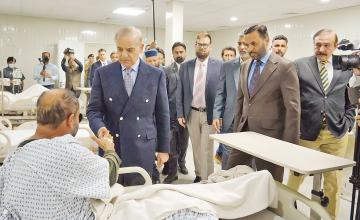
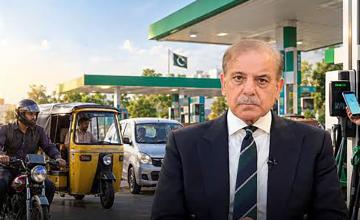
Prime Minister Shehbaz Sharif and Federal Minister for Health Syed Mustafa Kamal
- 07 Nov - 13 Nov, 2026


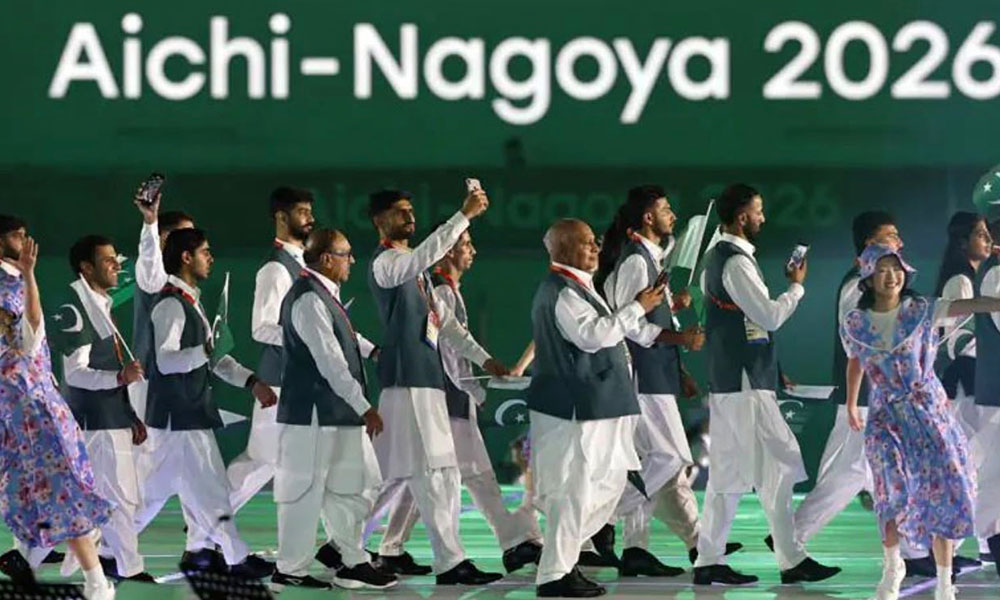
A national flag on a tracksuit carries more than a country’s name. It carries the hopes of children training on broken grounds, families struggling to buy equipment, and athletes waiting years for an opportunity. When Pakistan sends a delegation to the Asian Games, it owes those people more than photographs, ceremonial appearances and explanations after defeat.
The questions emerging from Aichi-Nagoya demand answers. Reports described a Pakistani contingent of 246 people, including athletes and officials. Size alone proves neither extravagance nor incompetence. But such a delegation must have credible objectives, measurable targets and transparent selection. Who approved those targets? Who checked readiness? Who will explain the results?
Consider tennis. Pakistan Tennis Federation president Aisam-ul-Haq Qureshi, aged 46, also participated as a player. His distinguished career deserves respect. His position demands scrutiny. Did an independent committee assess his current performance? Did he withdraw from decisions concerning his selection? Where were the younger contenders, and what opportunities had his federation created for them?
An experienced athlete can outperform a younger rival. Age should never replace evidence. Yet when a federation president remains among its national representatives, the public deserves to examine both the selection process and the development programme. A country cannot celebrate experience indefinitely while failing to produce successors.
The participation of 55-year-old Nosheen Aslam in table tennis raises a similar question. Her determination deserves recognition. The federation must explain her competitive standing, the trials held and the alternatives considered. Where is the pipeline of younger women capable of challenging for national places?
Claims about a female runner around 40 also require identification and verification. The proper tests are her recent timing, fitness and qualification record. Publish them. Transparent evidence can defend a deserving athlete and expose an unjustified selection.
Financing deserves equally direct attention. Accounts supplied for this article allege that 93 participants received government support while 141 travelled through self-financing arrangements. These figures require documentary confirmation. The principle is straightforward: paying one’s expenses cannot substitute for sporting merit.
Self-financing can help a qualified athlete compete when public resources are limited. It becomes indefensible if financial capacity determines selection. Every national representative should meet the same published standards, regardless of who buys the ticket.
There is also the allegation that participants were asked to pay Rs35,000 for national tracksuits. This requires investigation. If accurate, officials should disclose procurement costs, receipts and the reason athletes were charged. What equipment had already been budgeted for? Who received the money?
Reports that representatives lacked tracksuits or shoes, or that supplies arrived late, warrant examination. Clothing is a basic logistical responsibility. An organisation capable of arranging an international delegation should ensure that its members receive essential equipment.
The triathlon allegations are more serious. Accounts supplied describe unfinished races, swimming difficulties and possible rescue situations. These need independent confirmation. If athletes encountered danger, investigators must examine open-water training, readiness assessments and safety arrangements. Explaining that competitors were lapped may clarify a result; it does not establish adequate preparation.
Behind these questions lies a larger governance problem. Following the Eighteenth Amendment, the federal Ministry of Sports was devolved in 2011, while the Pakistan Sports Board continued under the Ministry of Inter-Provincial Coordination. Provincial governments became responsible for developing sports within their jurisdictions. Federal responsibilities did not disappear altogether.
Nevertheless, fragmented responsibility can become an excuse for inaction. Pakistan needs to examine whether coordination after devolution has delivered coherent national standards, talent development and accountability. Constitutional arrangements cannot excuse declining competitiveness. Provinces, federal authorities and federations must explain their contribution to preparing the athletes who ultimately compete under one Pakistani flag.
Arshad Nadeem’s fourth-place finish deserves a professional review. His best throw was reported as 80.29 metres. An Olympic champion can lose; defeat alone establishes no negligence. Training, medical support and technical preparation should be assessed through records, rather than insults about appearance or accusations exchanged between officials.
India finished fourth with 85 medals, including 21 golds. Differences in resources matter, but Pakistan must still ask whether its investment produces competitive progress. Attendance figures cannot replace outcomes, and participation certificates cannot conceal weaknesses in preparation.
Prime Minister Shehbaz Sharif should order an independent, time-bound review of selection, expenditure, equipment, safety and institutional responsibilities. Its findings should be public. Proven negligence must carry consequences, including removal where justified. Another meeting followed by reassuring statements would be an inadequate response.
Pakistan’s athletes deserve preparation and support. Taxpayers deserve accounts. Young talent deserves opportunity. The officials entrusted with all three must explain what they delivered. The Prime Minister should insist on answers, corrective action and deadlines. National representation is too important to remain an exercise without accountability.








COMMENTS