PRESENTING THE RECIPE FOR SUCCESS CHEF MEHBOOB KHAN FROM KITCHEN TO HOUSEHOLD NAME
- 24 Oct - 30 Oct, 2026


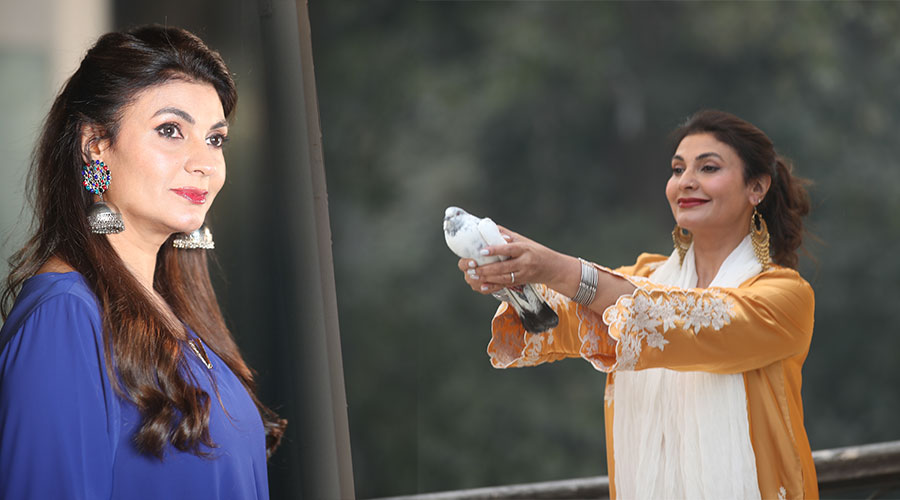
There are certain singers and songs that become synonymous with our childhood. Fariha Pervez is one such singer every 90’s kid grew up listening to. Apart from the many pop songs that we enjoyed on drives and get togethers, she also gave us the national basant song – Patang Baaz Sajna. Released in 1994, the song became an instant hit and to this day can be heard on repeat everywhere during basant celebrations.
But Pervez is neither a one-song wonder nor simply a pop artist. She is a classically trained singer who has given us a lot of melodious songs and renditions of classical works, too. She is also one of the few female role models the pop industry had during the 90’s who undoubtedly inspired a generation of young girls to pursue music. Articulate, accomplished, good looking and a well-maintained public image – she seems to have it all! MAG caught up with the singer for a heart-to-heart. Excerpts:
SK: Not everyone knows that you entered television before establishing yourself as a singer. Did you originally set out to be an actress? How did the transition happen?
FP: I came from a very talented family, so acting and singing both came naturally to me. I started as a child artist, appearing in dramas and music programs, without ever consciously choosing between the two. For a while, I pursued both, but after releasing my first album, music became my true calling and gradually shaped my journey as a singer.
SK: Your family has strong connections with the performing arts, while your father himself reportedly wanted to become a singer. Did his unfulfilled dream influence your decision to pursue music or was the desire naturally there?
FP: Music was naturally a part of my upbringing. Coming from a family connected to the performing arts, I grew up surrounded by music, and my father’s own passion for singing certainly influenced me. But I believe the desire to become a singer was something I discovered within myself. His unfulfilled dream may have opened the door, but it was my own love for music that made me walk through it.
SK: Women in Pakistan are not encouraged to pursue performing arts. What was your initial journey like?
FP: My journey was not without challenges. At the time, the performing arts were not always seen as an easy or conventional path for women in Pakistan. But I was fortunate to have a supportive family and a natural passion for music from a very young age. There were challenges along the way, but my love for music and determination kept me moving forward, and it finally led me to receive The Pride of Performance which is a huge achievement.
SK: You started formal classical training with Master Feroze Gill. What are some of the most important lessons that classical training has taught you?
FP: My teacher, Master Feroze Gill, was an exceptionally pious, honest, and pure-hearted soul, and his humility left a deep impression on me. Classical training taught me to recognise the real feel and sound of Sur/Taal and the importance of staying true to the purity of ragas and classical music of our region.
SK: Was there ever a moment when you thought about abandoning music altogether?
FP: Never! For someone with a deeply passionate and musical soul, abandoning music is simply not possible. There have been times when I became more occupied with my family and business, but music has always remained a part of me. It is one of the things that brings me the greatest happiness and fulfillment.
SK: Your debut album Nice & Naughty, particularly the song “Patang Baaz Sajna”, turned you into a household name. Do you remember the exact moment you realised the song had become a phenomenon?
FP: “Patang Baaz Sajna” was truly a turning point in my career. I remember the song gaining immense popularity and I suddenly started hearing it everywhere – on television, radio, at weddings, and from people from all walks of life. That was when I realised it had become more than just a song; it had become a part of people’s lives and the national basant festival song. It was a very special and unforgettable moment for me.
SK: The 1990s and early 2000s were a very different era for Pakistani pop, with albums, music channels and physical sales playing a major role. What do you miss most about that period?
FP: I miss the sense of connection and excitement around releasing cassettes and CDs, when artists, record label companies and audiences were much more closely connected. It was a challenging era, especially because of piracy and limited control over our work. Today, the digital world offers artists more direct access and greater transparency, the help of AI-generated music but it also requires artists to be well-informed and careful about protecting their work and rights.
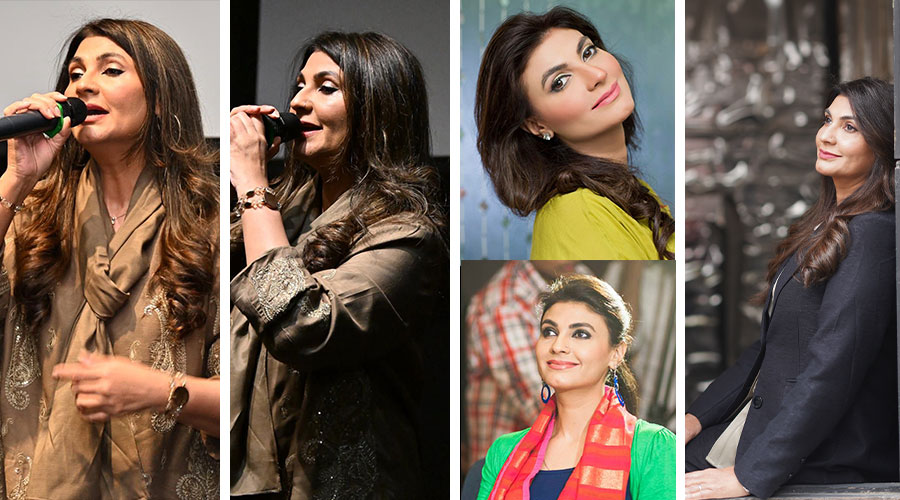
SK: Having experienced, both the golden era of Pakistani pop and today's digital music industry, which era do you think has given artists more creative freedom?
FP: I would say the golden era of Pakistani pop was more creatively liberating. There was a strong sense of human interaction, musicians playing together, live concerts, and a genuine excitement around creating something new. Today, artists have incredible access to technology and platforms, but I feel there is sometimes a tendency to follow what is already popular or familiar. The earlier era encouraged artists to experiment and develop their own sound.
SK: Your career has moved between pop, Punjabi folk, ghazal, semi-classical and classical music. Have you ever felt pressure to choose one musical identity?
FP: Not at all. I’ve always embraced different genres naturally. I grew up listening to a very wide range of artists – from Lata Mangeshkar, Asha Bhosle and Kishore Kumar, Rafi Sahab to Fariha Khanum ji, Mehdi Hassan Sahab, Ustad Salamat Ali Khan, Fateh Ali Khan, Nusrat Fateh Ali Khan, Abida Parveen ji and Sajjad Ali ji. That diversity shaped me as an artist and made me comfortable exploring different styles. I’ve always considered it a privilege to sing different kinds of music, rather than being confined to one identity.
SK: Which genre or musical style do you enjoy the most as an artist?
FP: I enjoy almost every genre, but I have a special love for classical, ghazal, folk, Punjabi music, and especially melody-driven songs. For me, it is the beauty and emotion of a melody that truly makes a song special.
SK: What do you think classical music gives a singer that contemporary pop simply cannot?
FP: Classical music gives a singer a deeper understanding of the true essence of music. It teaches you to listen to and feel every sur, from komal to teevar , and helps develop your musical ear, voice and expression. I believe that even for a contemporary singer, a strong foundation in classical music can shape their musical vision for life.
SK: Which of your songs is the closest to you, and why?
FP: “Patang Baaz Sajna” is definitely one of the closest to my heart. It has everything I love – the melody, lyrics, composition, and especially that beautiful feeling of celebration. In many ways, it became a defining song of my career.
I would also mention “Maya Tere Pyaar,” because of its beautiful, folk-inspired and traditional melody, and “Yaad Piya Ki Aaye,” my Urdu fusion rendition of the thumri associated with Ustad Bade Ghulam Ali Khan Sahab, but after more than three decades in music, it is difficult to name just one as every song carries a different memory, and each has a special connection with a particular chapter of my musical journey.
SK: I have heard you approached Rohail Hyatt yourself about appearing on Coke Studio. What made you want to be part of the platform at that particular stage of your career?
FP: [I approached Rohail Hayyat] because Coke Studio was an incredible platform for Pakistani artists, and I had always admired its creativity, reach, and the effort behind it. Interestingly, I had never approached anyone for an opportunity like that before. A friend encouraged me to write to Rohail, and although I initially hesitated, I thought, “Why not?” I found his Facebook page and sent him a few lines about my musical journey and the genres I wanted to explore. A few days later, he contacted me, and that conversation became the beginning of my journey with Coke Studio.
SK: Female artists are often judged as much for their appearance and public image as their craft. Did you ever feel that pressure?
FP: Absolutely! In showbiz, where music and visual presentation go hand in hand, appearance naturally becomes part of an artist’s public image. I have always felt grateful to Allah for blessing me with, both a voice and an appearance required for this field. I see these as blessings, and I have always tried to focus on letting my work speak for itself.
SK: What was the biggest challenge of maintaining your individuality as a female artist in an increasingly commercial music industry?
FP: I never really saw it as a challenge. From childhood, I was drawn to complex melodies and demanding genres, so I was naturally comfortable with musical challenges. I have always enjoyed exploring different melodies and styles while maintaining my own expression and individuality. For me, it was never about following a trend – it was about staying true to the music.
SK: How do you view the current Pakistani music scene? Do you believe the country is producing enough genuinely original music?
FP: I think there is a lot of talent in Pakistan today, and some very original music is being made. But I do feel we need to encourage artists to experiment more and not always follow what is already working or trending. We have such a rich musical heritage, and I would love to see today's artists take that heritage and create something completely their own.
SK: Streaming platforms and social media have completely changed how musicians reach audiences. Do you think today's artists have an advantage over your generation, or has the digital age created different pressures?
FP: I think every era has its own opportunities and challenges. Today’s artists have much greater access to audiences through digital platforms, but that also brings new pressures and competition. Ultimately, it depends on how an artist uses the opportunities of their time.
SK: Artists like Sajjad Ali have always vocally raised issues of royalty, credits, and lack of fundings for artists to produce good work. How do you suggest these issues can be resolved?
FP: I believe these issues can be addressed by creating a stronger culture of respect for intellectual property and fair compensation. Artists, composers, lyricists, producers, and musicians should be properly credited and paid when their work is used commercially. When a major platform uses an artist’s music, there should be a clear licensing agreement and appropriate royalty or usage fee. I agree with the point Sajjad Ali has raised about artists being fairly compensated for their work. At the same time, I believe we should encourage more original music and create a system that supports, both established and emerging artists.
SK: There is now a huge distinction between becoming famous through social media and building a career through years of musical training. Does formal training still matter?
FP: Absolutely! I believe formal training still matters tremendously. Social media can bring recognition, but training gives an artist the foundation, discipline and understanding of music that sustains a career. In my experience, talent may open a door, but learning gives you the depth to keep growing as an artist.
SK: Fame brings admiration but also criticism and expectations. What has been the hardest part of being a public figure for more than three decades?
FP: I think the hardest part is that being a public figure comes with a loss of privacy and a constant awareness of expectations. But I also believe that every blessing comes with its own responsibilities – that is simply part of life.
SK: When you look at everything you have accomplished – from television and your early albums to classical music, Coke Studio and the digital era – is there something you feel is still unfinished?
FP: For me, what remains unfinished is not a particular achievement, but the journey itself. I believe an artist must keep evolving with every era, embracing new challenges while staying true to their craft. I also feel a responsibility to share my experience and knowledge with the younger generation. After all, our work lives on, and I hope mine continues to inspire people, Insha Allah.










COMMENTS