What’s to watch on Netflix?
- 07 Nov - 13 Nov, 2026


Writer-directors Jonathan Goldstein and John Francis Daley have built a career around revisiting the spirit of ’80s entertainment. After the misfire of Vacation, the pair found their footing with Game Night and later Dungeons & Dragons: Honor Among Thieves, a fantasy-comedy that embraced the kind of storytelling once common in mainstream cinema. Their Apple TV original Mayday continues that nostalgic streak, functioning as a love letter to Top Gun and the buddy comedies of the Reagan era.
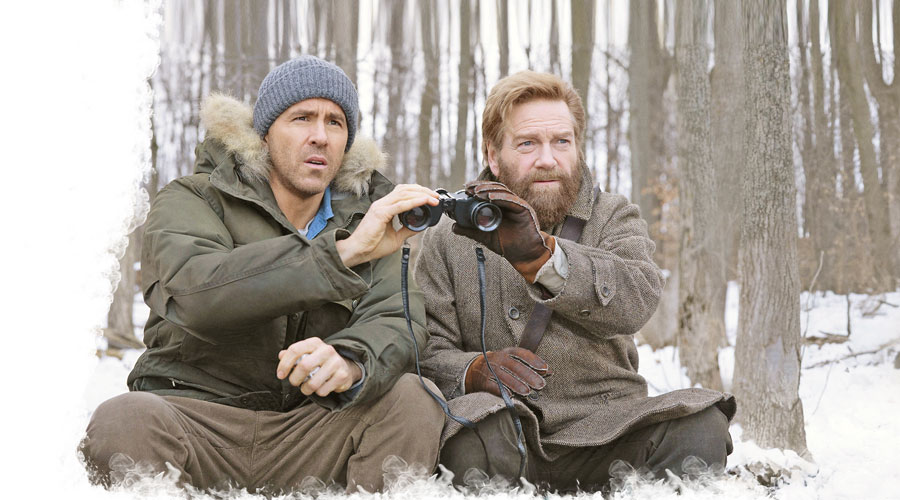
Set in 1987, Mayday follows Troy “Assassin” Kelly (Ryan Reynolds), an American Air Force pilot on an unofficial mission behind enemy lines near the end of the Cold War. After ejecting over snowy Russia, Kelly is discovered by Nikolai Ustinov (Kenneth Branagh), a former KGB agent whose fascination with American culture makes him an unlikely ally.
Branagh is the film’s greatest asset. Rather than playing Nikolai as a broad caricature of a Russian obsessed with America, he gives the character surprising warmth and humanity. Nikolai’s fascination with Top Gun, Bruce Springsteen and the fantasy of McDonald’s becomes more than a running joke. Branagh turns him into a grounded, eccentric and genuinely entertaining figure. It is one of the actor’s loosest performances in years and provides an excellent counterbalance to Reynolds’ familiar brand of swaggering humour.
The pair make a classic mismatched duo. Kelly represents American confidence and exceptionalism, while Nikolai is a disillusioned former Soviet operative who has turned against his own government. Their differences gradually give way to mutual trust after Nikolai saves Kelly during a brilliantly staged fight in a Russian watering hole, making himself a target as well. The two are subsequently forced onto the road together, searching for a way to escape a country that now considers them both enemies.
At its best, Mayday captures the uncomplicated charm of ’80s action cinema, when wildly different personalities could become unlikely partners. The premise even invites images of Arnold Schwarzenegger and Bruce Willis occupying similar roles during that era.
The filmmaking is considerably stronger than many of the movies that inspired it. Barry Peterson’s cinematography keeps the film visually fluid, giving its snowy action sequences and quieter moments a constant sense of movement. Goldstein and Daley also demonstrate excellent control of rhythm and pacing. At 111 minutes, the film rarely feels sluggish, moving efficiently from one set piece to the next while maintaining its comedic momentum.
However, the film occasionally becomes too conscious of its own nostalgia. The references, music and stylistic touches sometimes feel so deliberate that character development is pushed aside. Supporting roles, including Maria Bakalova as Nikolai’s daughter and David Morse as Kelly’s father, are underused. Reynolds can also slip into the familiar persona that makes it feel as though he is playing a version of himself rather than fully inhabiting the character.
Branagh repeatedly compensates for those shortcomings. He finds emotional truth in what could easily have become a one-note comic performance and proves surprisingly convincing as an action hero. The film suggests that, given the right material, Branagh could comfortably embrace a late-career action phase.
Mayday ultimately succeeds because its nostalgia feels affectionate rather than cynical. Goldstein and Daley clearly love the movies that shaped their filmmaking, and that enthusiasm is evident throughout. While the pair could eventually benefit from moving beyond their nostalgia-heavy approach, their work remains carefully constructed rather than merely derivative. Game Night and Honor Among Thieves have already gained appreciation beyond their initial reception, and Mayday may follow a similar path. Like the films that inspired it, this is a movie that may need time to find its audience.












COMMENTS