Met Gala 2024
- 25 May - 31 May, 2024



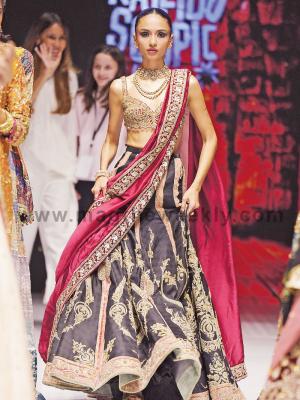
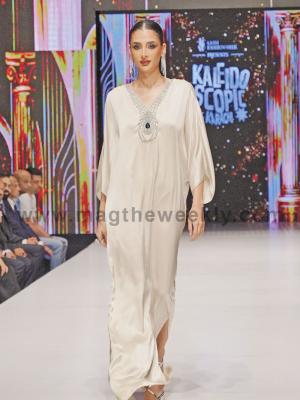
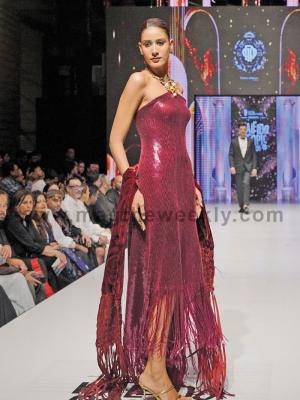
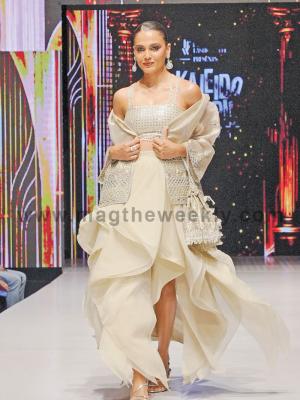
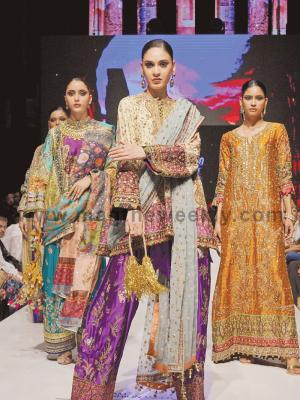
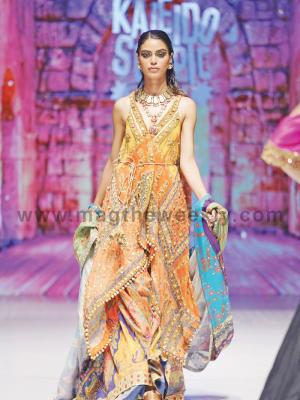
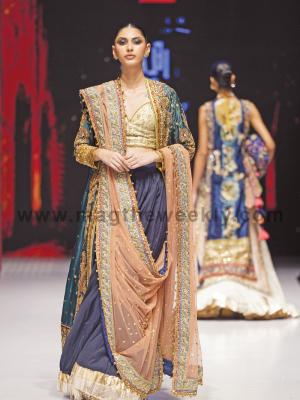
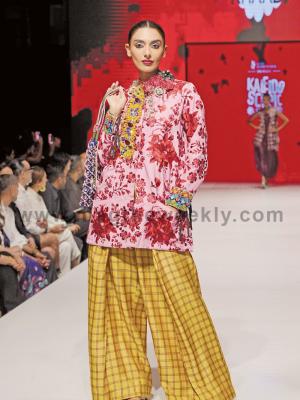
LAAM Fashion Week (LFW) closed the second edition of LFW Presents in Karachi with Kaleidoscopic Karachi, a five-designer runway showcase staged inside the historic Nusserwanjee Building at the Indus Valley School of Art and Architecture (IVS). The evening brought together designers Deepak Perwani, Wardha Saleem, Khaadi, The Pink Tree Company and Sana Safinaz, and opened with an archival exhibition by photographer Tapu Javeri. It was the format’s first edition outside Lahore.
Across the evening, the five presentations moved between the polished and the artisanal, the historic and the contemporary, the glamorous and the craft-first. Together, they read as a portrait of the city in fragments, and of a fashion industry that has never needed to sound like one voice to speak with authority.
The evening opened with Tapu Javeri – A Four-Decade Fashion Retrospective, an immersive exhibition drawn from the archive of one of Pakistan’s most influential fashion photographers and defining visual chroniclers of Karachi. Spanning decades of Pakistani fashion and the city around it, the exhibition set the tone for the runway that followed, tracing the visual memory of Karachi’s fashion history through Javeri’s lens.
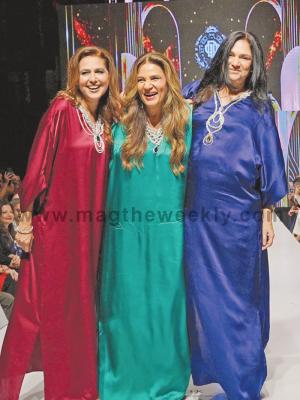
The runway then came alive with the presentations and the grand finale. Deepak Perwani’s Cocktail Hour opened the evening as an ode to the historic glamour of Karachi. The clubs, the after-hours, the sensuality the metropolis embodied through the mid-1970s. Perwani translated that memory through svelte silhouettes, sparkle, glitter and an alluring capsule that dressed the city’s past for its present. In a moment that landed as pure Karachi legacy, supermodels of the 80s, Frieha Altaf, Seemi Pasha and Atiya Khan, walked the collection as a living tribute to the era it celebrated.
Wardha Saleem followed with Bander Road Se Kemari, a tactile, street-alive reading of the city. The collection paid ode to centuries of Karachi’s architecture: colonial buildings and their balconies, regal motifs, the quiet grandeur of monuments woven into the city skyline. Hip, streetwear-adjacent and modern-luxe in feel, Saleem’s work carried the built city onto the body, turning cornice, arch and facade into cut, drape and print.
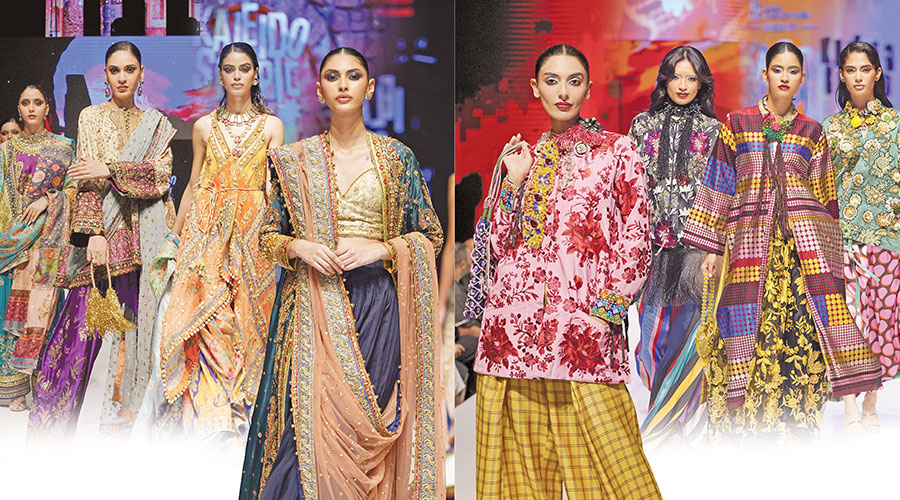
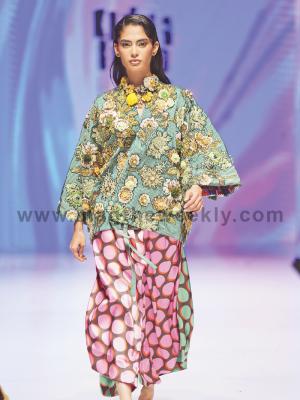
The Pink Tree Company, a craft-based luxury brand, presented Hands That Craft, a homage to Karachi and to the crafts that built the country’s fashion industry. The collection brought together textile, block print, dye, embroidery, gota and kaamdani, a bouquet of artistries carrying millennia of human excellence into a single runway moment.
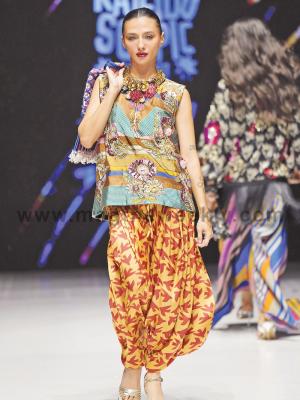
Khaadi presented Karachi – It’s Complicated, a collection built on the dichotomies the city is known for: the love and the hate, the chaos and the quiet. The tension translated literally onto the runway through contrasting colours, woven fabrics and stark, raving prints.
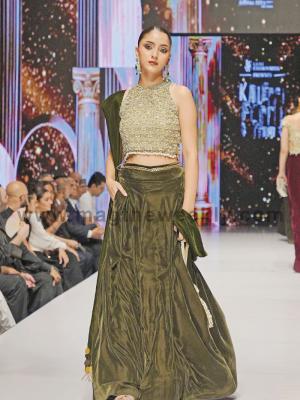
The finale closed with Sana Safinaz’s Mastaani, the label’s high-end luxury couture and festive line. Regal, avant-garde silhouettes met traditional heritage and modern aesthetic in equal measure. Fluid drapes, couture lehengas and statement pieces carried a quiet, graceful rhythm across the runway!
Off the runway, the evening drew an equally dynamic crowd, bringing together some of the city’s most recognisable names from fashion, entertainment, media and the creative industries. Among those in attendance wer vte Bunto Kazmi, Faiza Samee, Fahad Mirza, Gohar Rasheed, Iqra Aziz, Kamiar Rokni, Kubra Khan, Nadia Hussain, Parishae Adnan, Saniya Maskatiya, Sarwat Gillani, Shehla Chatoor, Sharmila Faruqui, Sonya Battla, Zainab Chotani, Zainab Qayyum and more, adding to a room that reflected the breadth, influence and cultural pulse of Karachi’s creative scene.
The setting was every bit as considered as the fashion. The Nusserwanjee Building at IVS, one of Karachi’s most evocative architectural landmarks, became a meeting point between the city’s past and its ever-changing present. Steeped in Parsi heritage and originally built in Kharadar, the historic structure was carefully dismantled, its stones carried across the city and rebuilt piece by piece at the IVS campus by the school’s architecture students, giving a fragment of old Karachi another life in a new setting. Against its walls, the evening’s fashion carried an added weight: a collision of Karachi’s past and present held inside a single room.










COMMENTS