The Many Notes Of Fariha Pervez
- 10 Oct - 16 Oct, 2026


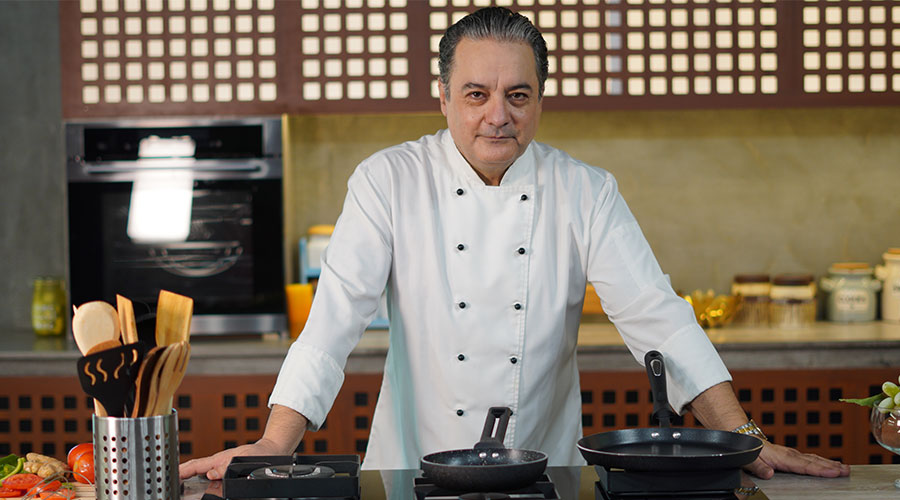
At a time when becoming a doctor, engineer or civil servant was considered the gold standard of professional success, Chef Mehboob Khan chose a different path. Drawn to cooking from an early age, he pursued hotel management despite the scepticism surrounding a career in the culinary arts. From the demanding realities of professional hotel kitchens to becoming a familiar face on television through MasterChef, his journey has been shaped by passion, perseverance and a willingness to take risks. For Khan, being a chef has never been merely about preparing food; it is a profession that demands technical knowledge, creativity, discipline and continuous learning. In a heart to heart, he speaks about the family influence that sparked his interest, the struggles that tested his resolve, the importance of respecting unconventional careers, and why skill and dedication matter more than social approval. Excerpts:
The First Taste of a Dream
Long before he became a recognised face in Pakistan’s culinary world, Mehboob Khan was a schoolboy fascinated by cooking. His earliest inspiration came from an unexpected source: his father. In a household where cooking was a shared interest among family members, watching his father prepare meals challenged the conventional notion that the kitchen was exclusively a woman’s domain.
“I got interested in Matric in 1982-83 and my source of inspiration that I remember was my father,” he recalls. His father prepared only a limited number of dishes, but did so well enough to leave a lasting impression on his son. “I used to think a man cooking at home was a joke, but I saw my father and realised for the first time that a man can also cook,” he shares. By the time Khan was in the seventh or eighth grade, cooking had already become an interest of his own. That enthusiasm has remained part of the family culture, with his brothers and sisters continuing to cook to this day.
His professional ambitions, however, were not immediately obvious to those around him. Like many Pakistani students of his generation, he was studying pre-medical as medicine was considered a respectable and secure career choice. But while others might have been preparing for medical college with a clear picture of their future, Khan found himself increasingly drawn towards the hospitality industry.
An advertisement for an apprentice chef changed the direction of his life. He cut it out of the newspaper, boarded a bus and travelled to a hotel to enquire about the opportunity. He was only around 12 or 13 years old, and the response was predictable: he was told to return when he turned 18. yet the rejection did little to diminish his interest. If anything, it confirmed how strongly he felt about the profession.
At the time, Khan had no particular attraction to medicine, engineering, the civil services or the armed forces. Cooking was the one field that held his attention. He describes himself as someone who takes risks when something feels right, often committing to an idea before weighing every possible advantage and disadvantage.
That instinct would become a defining feature of his career. Rather than limiting himself to one aspect of cooking, he would go on to explore food styling, recipe mixes and other areas of the culinary industry. For Khan, the profession offered room to experiment, learn and reinvent himself.
Burning His Boats
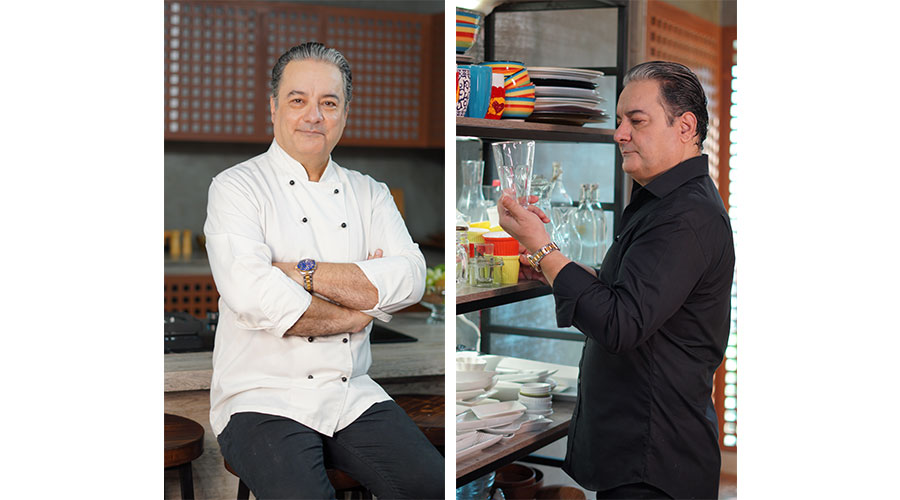
His decision to pursue hotel management was not simply a matter of choosing a course. It meant stepping away from the career path his education had appeared to set in motion. The memory of Karachi Sheraton Hotel had already taken root in his imagination during his pre-medical studies. From the terrace of the apartment where his family lived, he would look towards the hotel’s logo and repeat a thought to himself: “someday I am going to be there.” He shares, “And exactly after two years I was there. If you give yourself direction, life takes you there.”
Two years later, he found himself at the hotel, first as a trainee. The journey began to resemble the destination he had imagined, although the reality of professional cooking would prove considerably more demanding than the dream.
After completing his intermediate education, Khan applied to the Pakistan Institute of Hotel and Restaurant Administration in Karachi, which attracted students from across the country. He secured admission without initially telling his family. The decision was eventually revealed almost by accident when his father was travelling to Saddar and Khan asked him for a lift. When asked what he was doing, he explained that he was studying hotel management.
“The definition of success extends beyond income. It involves dedication, knowledge, professional growth and the ability to keep working towards a goal even when the outcome is uncertain"
His father did not react with alarm. When Khan later told his family that he wanted to become a chef, the response was supportive. “Work hard and earn halal,” his father would tell him. Khan assured him that he would work hard and earn an honest living, and his father encouraged him to continue. The same acceptance did not extend to everyone around him. Some relatives looked down on the profession, using words such as “bawarchi” (cook) dismissively. Khan, however, he argues that the problem is not the word itself but the attitude attached to it. A chef is a skilled professional, and preparing food is no less worthy of respect than working in another field.
The experience shaped his advice to young people who are afraid of pursuing less conventional careers. He encourages them to take the direction they fear most rather than remain paralysed by the possibility of failure. “When I came into this profession, my friends said I came here by burning boats,” he explains. Yet Khan had decided not to keep another career waiting in reserve in case cooking did not work out. Looking back, he believes that commitment was one of the reasons he persevered through the difficult years. “If I turn back and look, I had no other option except this option.”
The Reality Behind the Kitchen Doors
The first serious test of his resolve came during industrial training at Karachi Sheraton. The hotel had once represented a distant ambition; now, he was experiencing the demands of its professional kitchen firsthand. The work was physically exhausting, the salaries were modest, and long hours on his feet were part of everyday life. Khan recalls, “The condition of my legs was such that my feet would be extremely swollen, as I was not used to standing for so long.” For someone still adjusting to the profession, the strain was considerable.
Khan remembers trainees gathering in the locker room after only a few days to question whether they wanted to spend their working lives in such conditions. His feet became so swollen that his shoes barely fitted. Two students left the course before completing their industrial training, having decided that the work was too difficult and the financial rewards too limited. For a brief period, he too questioned his decision. The experience revealed a side of professional cooking that the glamour associated with hotels often conceals. There was little room for romantic notions when the work required physical endurance, concentration and the ability to keep going under pressure.
The early years also taught him that cooking is as much a mental discipline as a physical one. Professional kitchens require careful timing, coordination and the ability to manage several demands simultaneously. Deliveries must be ready, tasks must be completed within deadlines, and pressure cannot be allowed to compromise the work.
Travel added another layer of difficulty. At one stage, Khan lived far from his workplace in an area with limited public transport. With only a morning and an evening bus available, he often had to walk or find alternative ways of getting home. Such experiences, he says, were part of the reality of learning a trade.
For aspiring chefs, the lesson is that passion is essential, but it must be accompanied by stamina, discipline and a willingness to learn through difficult experiences. Interest may draw someone into a profession; it is the work itself that determines whether they can remain in it.
Who Owns the Kitchen?
Khan’s own introduction to cooking also informs his views on the gender expectations that continue to shape attitudes towards food preparation. “My brother and my father used to cook at my house, and they still do it till date,” Khan says proudly. He grew up in a household where his father and brothers cooked, and he sees no reason why the responsibility should be assigned exclusively to women. The distinction between men cooking professionally and women cooking at home is, in his view, a double standard. Men can be celebrated for their culinary skills in restaurants while women are expected to prepare meals every day, often without recognition or even an opportunity to decide whether they enjoy the work.
“I have worked a lot in Germany. There are women who work equally [in the kitchen professionally], there is no difference. There are women who are very big chefs in Europe, in America, they hold high posts,” Khan reveals. He also acknowledges the contribution of women chefs from whom he has learnt throughout his career. “I've learned a lot from them, and I'm always keen to learn from them,” he says. For him, respect for women in the culinary profession must extend beyond professional kitchens. It also means recognising the effort involved in domestic cooking and understanding that not every woman has a natural interest in preparing food. Many undertake the responsibility because it is expected of them.
He points out that home kitchens are not necessarily designed for comfort or efficiency in the way professional kitchens are. Heat, poor ventilation and limited space can make the work difficult, particularly when it is performed every day.
Khan enjoys cooking at home and often prepares meals himself. But his enthusiasm is precisely why he believes cooking should be a choice rather than an obligation imposed by gender. A skill that can be learnt and enjoyed by anyone should not become the exclusive responsibility of one group.
The Work Behind Recognition
For years, Khan’s career was built through practical experience, professional training and an ongoing commitment to learning. He describes spending four to five hours a day reading books, studying tutorials and articles, watching videos and exploring new techniques. His ambition was not simply to work in kitchens but to understand the profession in depth.
That commitment eventually took him into hotel and restaurant management, including work at a 60-room hotel in Gulberg, Lahore, which also housed a restaurant. Yet professional experience did not guarantee immediate financial security. Khan recalls a difficult period of around three and a half years following a significant change in his career. Money was tight enough that, despite owning a car, he sometimes struggled to afford diesel. The contrast between the effort he had invested and the financial reality was frustrating, but it did not alter his belief in the work.
Marriage and fatherhood added to the pressure. Even with the lack of long-term financial stability, Khan was not prepared to abandon a profession to which he had devoted so much of himself. He says, “The definition of success extends beyond income. It involves dedication, knowledge, professional growth and the ability to keep working towards a goal even when the outcome is uncertain. Financial stability matters, but it is not the only measure of a person's commitment or worth.”
His appearance on MasterChef became a significant milestone, particularly in terms of public recognition, which also a milestone that is the closest to his heart according to him. Khan is keen to distinguish his professional identity from the label of television chef. He has formal qualifications, a diploma and extensive industry training; television is one part of a much longer culinary journey.
The programme also presented its own challenges. Designing tasks and challenges for participants required thought and preparation, while appearing on television introduced his work to a much wider audience. Of the three judges, he was also the one who worked as a consultant for the programme.
The show helped audiences recognise him, and people began associating his name with the programme wherever he went. Beyond the visibility, it offered an opportunity to bring professional culinary knowledge to a broader public.
Redefining Respectability
Khan’s experience has made him particularly critical of the pressure young people face to pursue conventional careers. He believes students are often expected to make important professional decisions without being given enough guidance to identify their interests or develop their abilities.
Parents may dream of having a doctor or engineer in the family, but Khan questions why other professions should be treated as less worthy. Why should a young person not become a painter, guitarist, chef or horticulturist if that is where their interest lies?
He remembers a friend who studied horticulture while he was pursuing hotel management. The friend travelled to London at his own expense and faced resistance from his family to obtain a degree in the field. At the time, horticulture was not widely regarded as an ambitious career choice. Today, that same friend has built major golf courses in Pakistan and the Middle East and established himself professionally.
For Khan, this example illustrates the gap between social perception and the value of specialised skills. A profession does not become worthwhile only after other people begin to approve of it. Its value also lies in the knowledge, effort and expertise required to do the work well.
He extends this argument to technical trades such as plumbing, electrical work and other skilled occupations. In many countries, these fields require formal training and offer specialised career opportunities. Yet they can still be overlooked by young Pakistanis who have been encouraged to think only in terms of a narrow range of prestigious professions.
He is equally sceptical of the tendency to treat another person's career as a test case for one's own children. Some families, he says, wait to see whether someone else succeeds before considering the same profession for their children. But the more important question is whether the child has any interest in that field in the first place.
Khan believes people should establish their own standards of success rather than choose careers according to social trends or the promise of quick financial rewards. Entering a profession simply because it appears to have scope does not guarantee achievement; sustained interest, dedication and skill remain essential.
His own journey is a reminder that unconventional choices can demand more courage precisely because they come without immediate approval. The work may be difficult, the rewards uncertain and the criticism persistent. But a meaningful career is built by developing expertise and remaining committed to the work, not by waiting for everyone else to understand the decision.
A Chef's Curiosity
Despite his years in the industry, Khan's interest in food continues to be fuelled by curiosity. His culinary inspirations are not limited to internationally celebrated chefs. He is particularly interested in discovering local cooks whose work demonstrates skill and creativity, even if they lack the recognition or formal training associated with established names.
He speaks enthusiastically about a chef from Peshawar whose videos appear on YouTube, as well as cooks in Karachi and Lahore and a woman from Multan. Their work appeals to him because of their abilities and the individual character they bring to their cooking.
He hopes to invite such people onto his show or feature them in podcasts, giving them an opportunity to discuss their journeys and share the experiences behind their food. For Khan, their stories deserve attention because talent can emerge from places and backgrounds that the mainstream culinary world does not always acknowledge.
When it comes to his own favourite cuisine, he is particularly fond of Lebanon, especially Beirut, where he has experienced the food firsthand. His practical approach to cooking is equally evident in his choice of kitchen essentials. He considers a hand blender an exceptionally useful appliance, particularly for tasks that can become messy when performed in a jug blender. But the tool he considers indispensable is a good kitchen knife.
Khan observes that people are often willing to spend considerable amounts on non-stick pans while dismissing the importance of investing in a quality knife. In his view, the knife is one of the most valuable tools in a kitchen because it influences both the quality and safety of food preparation.
A sharp knife, he argues, is not necessarily more dangerous than a dull one. When used correctly, it allows for better control and more precise cutting, while a dull blade can slip and cause accidents.
Even his relationship with food reflects a degree of self-awareness. He says he has stopped drinking tea because of its sugar content and generally avoids sweets. Occasionally, however, he experiences a craving and may eat an entire packet of biscuits. The craving tends to last a few days before disappearing for several months.
It is a small glimpse into the habits of someone whose professional life revolves around food but whose interests extend well beyond the act of cooking.
For Khan, the culinary profession remains a field of continuous discovery. It offers opportunities to learn from others, explore different techniques, recognise overlooked talent and challenge assumptions about who belongs in a kitchen. His journey began with a schoolboy's fascination and a determination to follow an unfamiliar path. Decades later, the same commitment to learning continues to define his approach – not only to food, but also to the meaning of a successful career.














COMMENTS