Prime Minister Shehbaz Sharif and Federal Minister for Health Syed Mustafa Kamal
- 07 Nov - 13 Nov, 2026


Pakistan’s creation was the outcome of political conviction, constitutional argument and determined leadership. The Two-Nation Theory provided the intellectual foundation for the demand for a separate homeland for the Muslims of the Subcontinent, while the struggle that culminated in independence was conducted through political mobilisation, negotiation and reason rather than terrorism or indiscriminate violence. The aspiration was to establish a state where dignity, security and peaceful coexistence could be protected. This history continues to inform Pakistan’s understanding of peace: it is not an alternative to national defence, but a principle that must be sustained through prudence, patience and preparedness.
Since independence in August 1947, Pakistan has expressed its desire for peaceful relations with its neighbours and the wider international community. Yet its experience has also underscored that the pursuit of peace cannot require the abandonment of sovereignty or the right to defend against aggression. Pakistan’s armed forces consequently bear responsibilities that extend beyond territorial defence to include contributions to regional stability and international security. Within this framework, the Pakistan Navy has acquired growing significance as maritime commerce, energy supplies and strategic sea lanes have become indispensable to the functioning of the global economy.
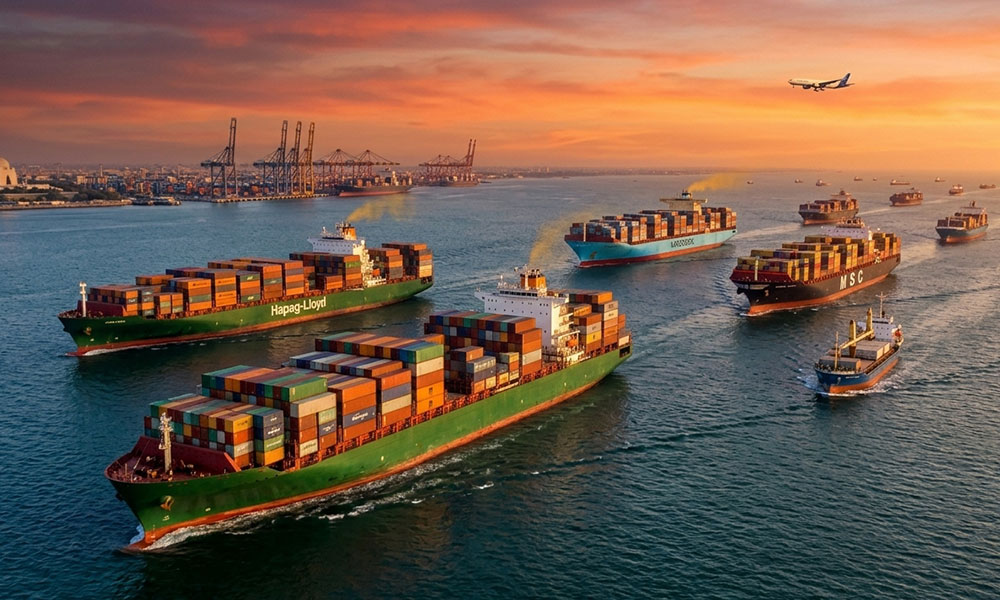
The oceans are no longer simply geographical spaces separating continents. They are vital arteries of international trade, linking economies, transporting energy and sustaining the movement of essential commodities. Disruption caused by piracy, terrorism, illicit trafficking or geopolitical confrontation can produce consequences far beyond the waters in which it originates. Maritime security, therefore, cannot be treated as the exclusive responsibility of individual states. It requires coordination, professional competence and a willingness to manage shared risks through collective action.
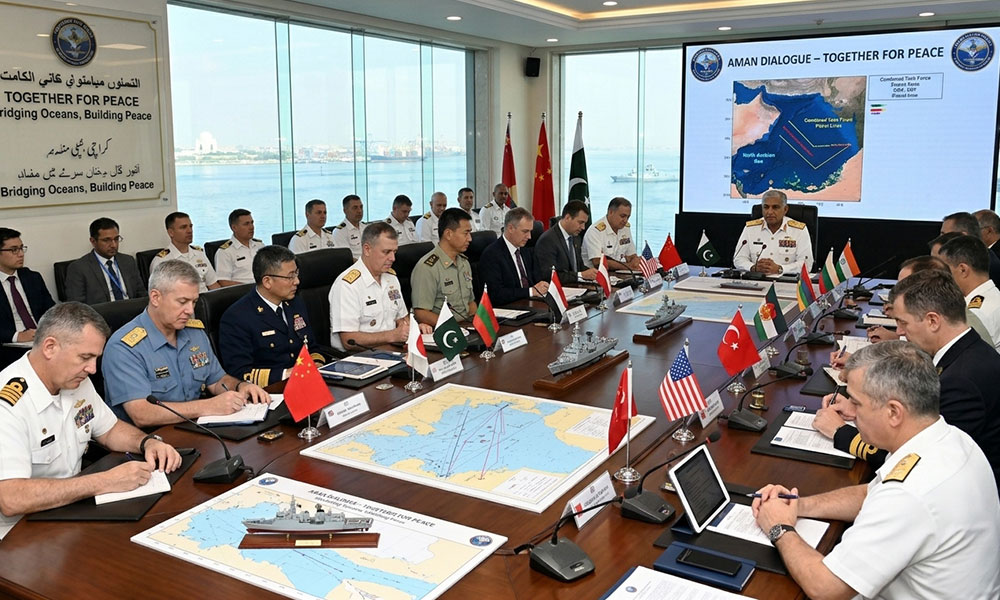
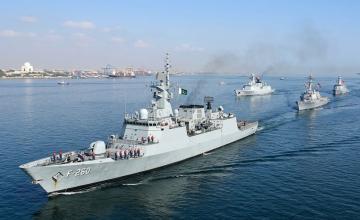
Recognising this imperative, the Pakistan Navy launched the multinational maritime exercise AMAN in 2007 under the motto “Together for Peace”. The initiative sought to bring together navies with differing political orientations, strategic priorities and security concerns around a common objective: safer seas through cooperation. Its significance lay not merely in the demonstration of naval capabilities, but in the opportunity it created for professional engagement, joint training and the development of mutual understanding. In a region and an international system often shaped by competing interests, the exercise offered Pakistan a platform to build bridges where strategic differences might otherwise reinforce divisions.
The expansion of AMAN reflects the growing international interest in collaborative maritime security. The inaugural exercise, held from March 5 to 13, 2007, involved 28 countries. Fourteen warships from Bangladesh, China, France, Italy, Malaysia, the United Kingdom and the United States participated alongside specialist teams and observers. Participation subsequently increased to 34 countries in 2017 and 46 in 2019. By AMAN-23, the number had risen to 49.
The ninth edition, held in the North Arabian Sea from February 7 to 11, 2025, brought together 58 countries. The participation of naval vessels, specialist teams, senior defence representatives and observers gave the exercise both an operational and a diplomatic dimension. Numbers alone, however, do not adequately measure its significance. The more important question is whether such encounters generate durable professional relationships, improve communication and establish habits of cooperation that remain useful beyond the exercise itself.
Pakistan’s maritime engagement forms part of a broader contribution to international security. Its participation in United Nations peacekeeping operations, involvement in the UN-mandated Combined Maritime Forces through Combined Task Forces 150 and 151, and engagement in bilateral and multilateral naval exercises reflect an interest in collective responses to transnational threats. AMAN reinforces this approach by providing opportunities for participating navies to improve coordination against terrorism, piracy and other illicit activities at sea. Such cooperation is particularly important when threats cross national jurisdictions and no single country possesses all the resources required to address them effectively.
The tenth edition, AMAN-2027, is planned for January 29 to February 2, 2027. Its accompanying second AMAN Dialogue is intended to broaden the initiative beyond operational training by bringing together naval and coast guard chiefs, defence representatives, senior officials and maritime experts. Through keynote addresses, seminars and bilateral and multilateral meetings, the dialogue will provide a forum to discuss emerging security concerns, assess existing mechanisms of cooperation and consider responses to an evolving maritime environment.
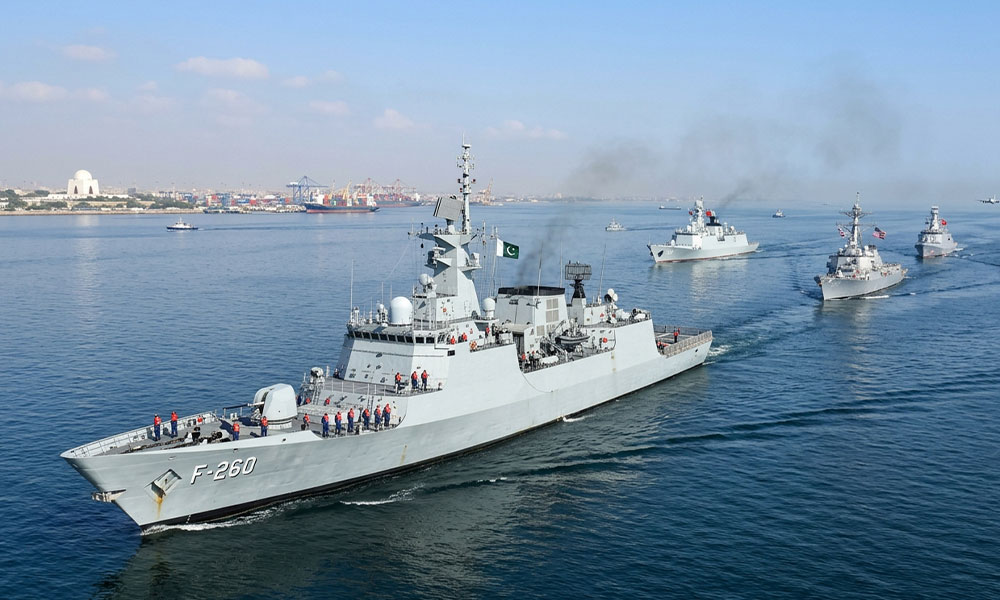
The timing is significant. Maritime security increasingly intersects with energy security, environmental protection, technological change and the development of the blue economy. The seas offer substantial opportunities for trade, investment, fisheries, shipping and other economic activities, but these opportunities cannot be realised sustainably without effective governance and a secure maritime environment. For Pakistan, whose economic prospects are closely connected to its coastline, ports and access to international shipping routes, these questions have implications extending well beyond naval strategy. They are also matters of economic resilience and long-term development.
The AMAN Dialogue can help connect immediate security concerns with these wider developmental priorities. However, its value will depend on the quality of the discussions and the extent to which proposals translate into practical cooperation. Conferences can generate ideas, but institutions must carry them forward. Similarly, naval exercises can improve preparedness, but their broader contribution to peace depends on sustained engagement, clear communication and respect for the legitimate interests of participating states.
For Pakistan, AMAN also provides an opportunity to present its maritime capabilities, professional expertise and economic potential to the international community. Yet a country's international standing cannot be secured through ceremonies or publicity alone. Credibility develops through consistent conduct, dependable commitments and a willingness to contribute constructively to shared objectives. The continued expansion of AMAN offers Pakistan a platform to demonstrate these qualities while strengthening its engagement with countries across different regions.
The limits of such initiatives must also be acknowledged. Naval exercises cannot eliminate geopolitical rivalries, resolve territorial disputes or remove the underlying causes of international conflict. Participation in a common activity does not imply agreement on every strategic question. Nevertheless, professional interaction can reduce misunderstandings, improve operational readiness and preserve channels of communication when political relations become strained. These are modest but meaningful contributions to a more predictable maritime environment.
As AMAN-2027 approaches, its central proposition deserves renewed attention. In a world where strategic competition frequently overshadows common interests, the protection of maritime routes remains an area in which cooperation is not merely desirable but necessary. The sea connects nations through commerce, energy and shared vulnerabilities; its security cannot be sustained by one country acting alone.
The enduring test of AMAN will therefore lie not in the number of ships assembled or flags displayed, but in the relationships strengthened and the cooperation sustained after the participating forces return home. For the Pakistan Navy, the exercise represents an opportunity to align national maritime interests with a wider commitment to regional stability. Its larger message is straightforward: lasting maritime security is most likely to emerge when states recognise their interdependence, manage their differences responsibly and work together to protect the common waters on which prosperity depends.













COMMENTS