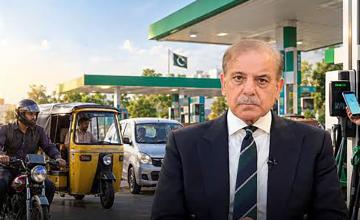
Prime Minister Shehbaz Sharif and Federal Minister for Health Syed Mustafa Kamal
- 07 Nov - 13 Nov, 2026


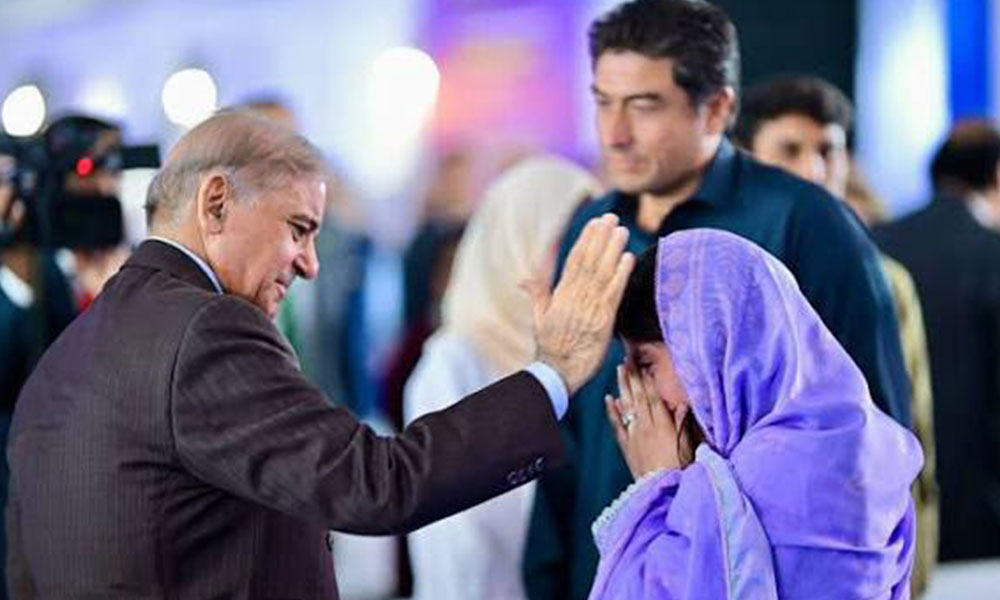
Dr Aleena stands before the audience. Her voice carries through the microphone, and the story of a working family begins to hold everyone in the hall spellbound. Pakistan’s Prime Minister, Mian Shehbaz Sharif, listens attentively. As Aleena speaks of her father, the focus shifts to a man who is no longer alive, yet lives on in his daughter’s achievement.
Her father was a tailor. He stitched clothes, supported his family and dreamed of seeing his daughter become a doctor. What an ambitious dream for a father with such a modest income. Then, while Aleena was still a child, he passed away. His death deepened the family’s difficulties. For a young girl, however, an even greater loss was the reassurance that someone was looking out for her future.
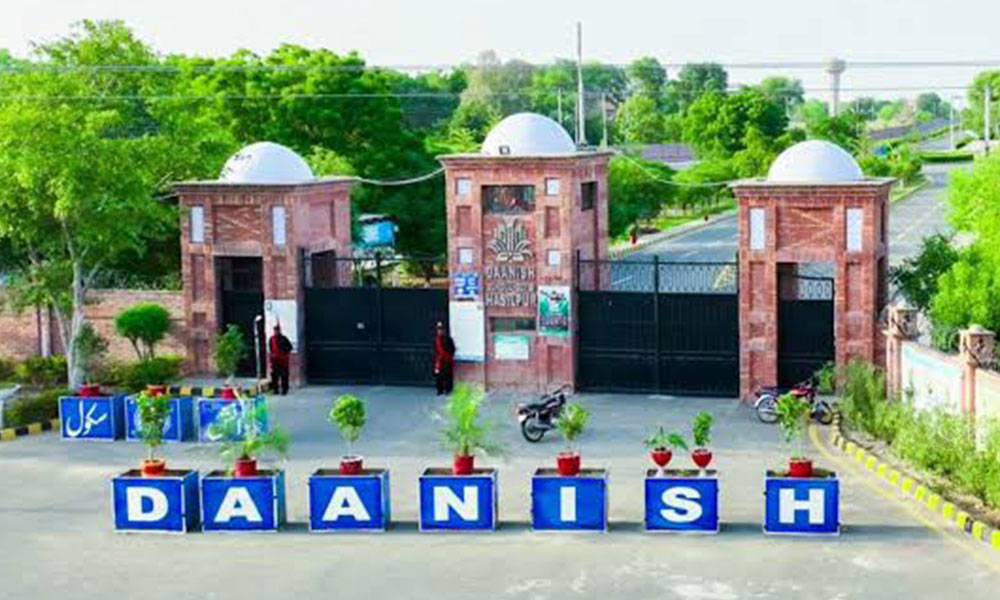
Aleena explains how Daanish School supported her. She was able to continue her education without worrying about accommodation or meals. With guidance from her teachers, she kept moving towards her dream. This young girl from Daanish School in Hasilpur went on to attend King Edward Medical University. Today, she stands before the audience as a doctor.
As Aleena speaks, one notices the moisture in Shehbaz Sharif’s eyes. Her father is not here to witness his daughter’s achievement, but the prime minister’s warmth offers her something of a father’s comforting presence. For Shehbaz Sharif, she stands before him as a daughter of the nation. In the emotional atmosphere of the hall, this moment gives meaning to the relationship between the state and a vulnerable child. The sapling he planted through Daanish Schools in 2010, during his tenure as chief minister of Punjab, has grown into a tree that is now bearing fruit. Dr Aleena is one such fruit. Her achievement brings together a late father’s dream, a daughter’s hard work and the state’s support. Perhaps the tears in Shehbaz Sharif’s eyes reflect the joy of knowing that one decision helped save a father’s dream from falling apart.
Then comes the story of Zahid Gul, from Kurram district in Khyber Pakhtunkhwa, which touches the heart in a different way. He wanted to study, but his family faced difficult circumstances. On his days off, he sold scrap to cover the cost of his education.
For a moment, imagine your own child in his place. At an age when we worry that our children’s schoolbags are too heavy, a child like Zahid was collecting scrap to keep his education alive. He, too, wanted to move forward, but every ambition came up against the pressing needs of his household.
Daanish School gave Zahid support. He now has the opportunity to study, develop his abilities and become a responsible citizen. His destination still lies ahead, but a path has opened before him. For a child, it is an enormous change to be able to think about the next school year instead of the next day’s labour.
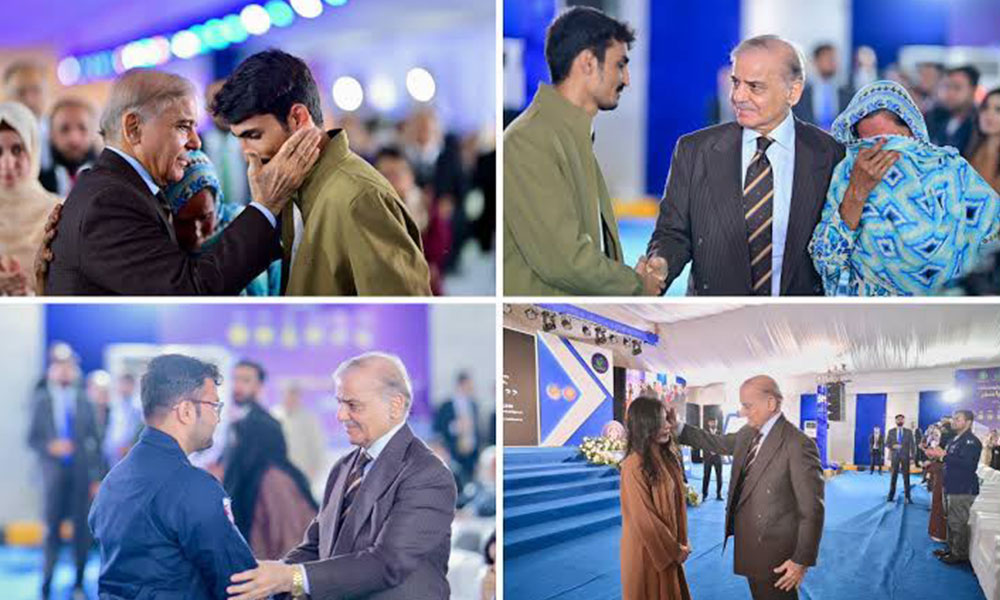
This is the true significance of Shehbaz Sharif’s vision for education. He recognised that intelligence is not the preserve of wealthy families. A future doctor, engineer or teacher may also be growing up in a labourer’s modest home. He deserves credit for establishing institutions, providing resources and opening doors to children in need. Today, children like Aleena and Zahid are living testimony to that vision. What greater satisfaction could a leader have than to see an initiative he began become a source of support for an orphaned girl and hope for a child facing hardship?
I believe that waiving school fees alone is not enough to keep a poor child in education. Children also need food, accommodation, uniforms, healthcare and their teachers’ attention. Daanish Schools provide these facilities to deserving children so that their families’ financial difficulties do not disrupt their education.
To the best of my knowledge, more than 40,000 boys and girls are studying across a network of 34 institutions comprising Daanish Schools and Centres of Excellence in Punjab. Equipped with knowledge and skills, these children are preparing to fulfil their families’ hopes and help build Pakistan’s future.
At present, approximately 1,100 children from Khyber Pakhtunkhwa and other provinces benefit from Daanish Schools through a special quota. Admission requires verification of financial circumstances, academic merit and family background. Six Daanish Schools are now under construction in Khyber Pakhtunkhwa. Their timely completion will enable thousands more children to benefit from this outstanding educational system.

Here, it is necessary to hold Khyber Pakhtunkhwa’s political leadership to account. Pakistan Tehreek-e-Insaf has repeatedly been given the opportunity to govern the province for more than a decade. People placed their trust in its promises of education, justice, employment and development. Why, then, does children’s education remain insecure? Why are families affected by unrest still anxious about their future? Terrorism has many causes, but the provincial government cannot absolve itself of its responsibilities for education, administration and public safety. People have the right to ask where resources were spent, what became of educational promises, what action was taken on complaints of corruption and how much priority children’s needs received amid political confrontation.
The real test of politics lies in the life of a child who is searching for work instead of going to school. It is the state’s responsibility to take that child by the hand and bring them back into education. This is why Shehbaz Sharif’s decision to extend Daanish Schools to Khyber Pakhtunkhwa deserves appreciation. This initiative should now be expanded to Sindh, Balochistan and other areas, so that deserving children there can also receive a quality education and Shehbaz Sharif’s vision can transform their lives as well.









COMMENTS