PAKISTAN'S JUNIOR HOCKEY
- 07 Nov - 13 Nov, 2026


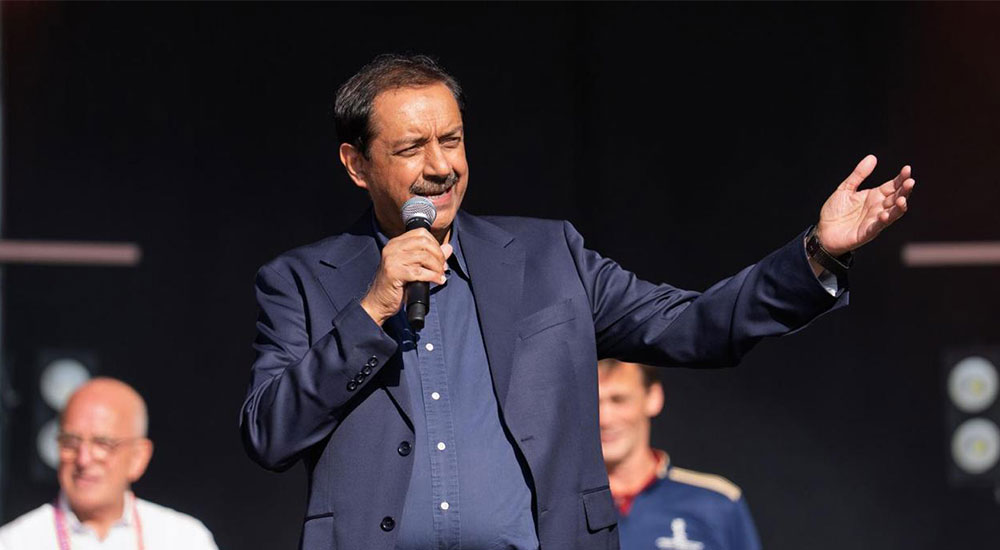
UNLOCKING HOCKEY’S GLOBAL POTENTIAL.
Tayyab Ikram is widely recognized as a popular, successful, and outstanding personality in international hockey. In recognition of his invaluable services to the sport, President of Pakistan Asif Ali Zardari has announced that he will be conferred the prestigious Tamgha-e-Imtiaz (Medal of Excellence).
Born in Pakistan, Tayyab Ikram is highly respected in international hockey circles. As President of the International Hockey Federation (FIH), he is admired for his outstanding work, exceptional leadership, and excellent organizational skills.
Tayyab Ikram made history in November 2022 when he was elected as the 13th President of the International Hockey Federation, becoming the first Pakistani to lead the world governing body of hockey. He was re-elected unopposed in 2024 and will serve as FIH President until 2032.
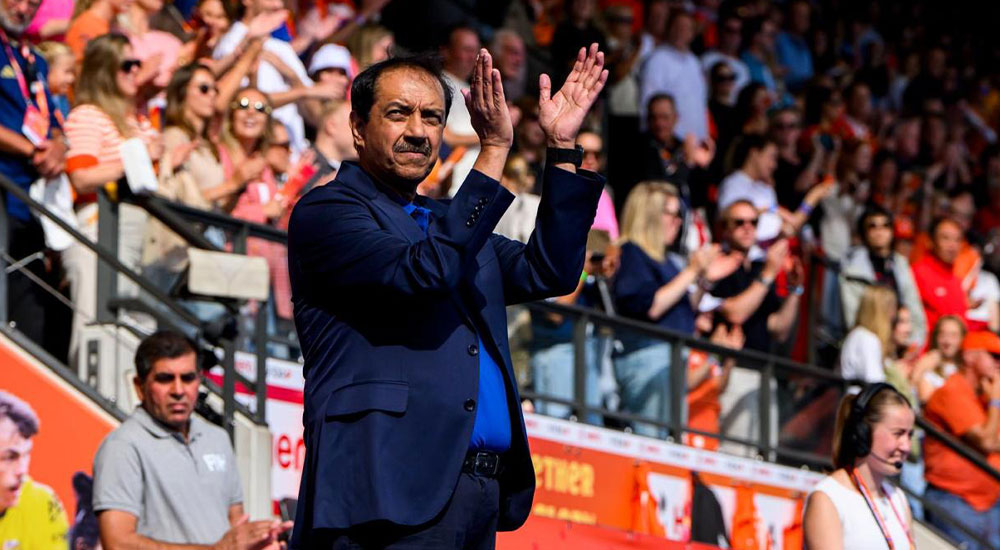
Ikram began his journey in Pakistan and has held several prominent positions in international hockey and sports administration. Before becoming FIH President, he served as Chief Executive Officer of the Asian Hockey Federation and held various responsibilities with international sports organisations.
Question: Mr. Tayyab Ikram, the Government of Pakistan has recently announced the prestigious Tamgha-e-Imtiaz (Medal of Excellence) in recognition of your services to the national sport of hockey. Could you tell us about your journey in hockey and your experience as President of the FIH?
Answer: As a Pakistani, I consider myself fortunate to be a son of this land. My passion for hockey began during my school and college days. I later completed several coaching courses, which proved to be a different and exciting experience.
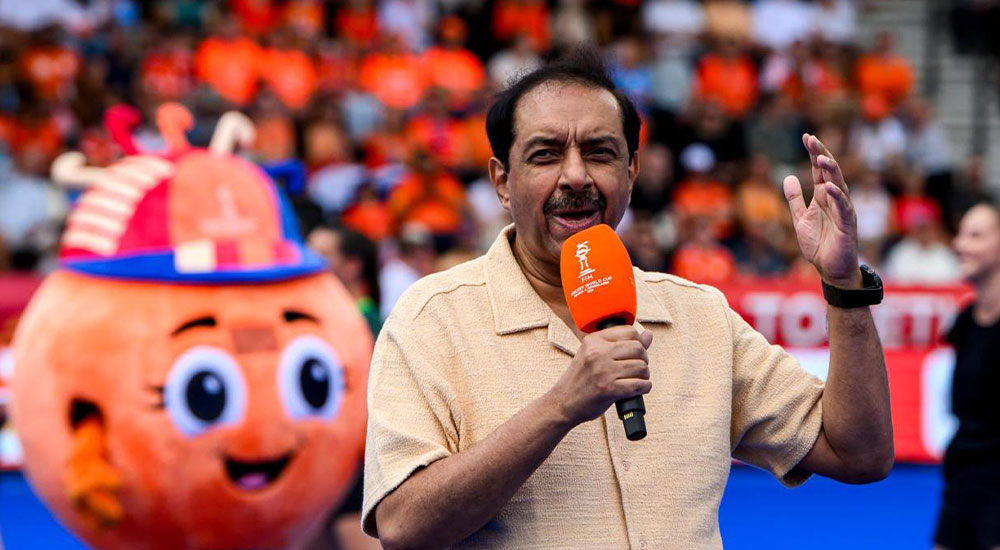
Interestingly, I had started corresponding with the FIH while I was still a student. We approached them to ask how we could help children facing difficulties in the sport of hockey.
About 25 years ago, I was contacted by the FIH, which wanted to appoint a Coaching Project Manager. I was fortunate to be selected for the position. This opportunity required me to move abroad, where I learned a great deal and gained valuable experience.
That, in brief, is how my journey began.
Question: Mr. Tayyab Ikram, you organized the 16th edition of the FIH Hockey World Cup in Belgium and the Netherlands, where Germany successfully defended its title. How was the experience?
Answer: Yes, it was a 14-team tournament, and we were very pleased with the joint hosting by Belgium and the Netherlands. In fact, both countries have a rich hockey tradition and are outstanding hockey nations.
We often discuss hockey in Pakistan and India, but we must also acknowledge that the Netherlands is a remarkable hockey nation where the sport is progressing in the right direction and continuing to flourish.
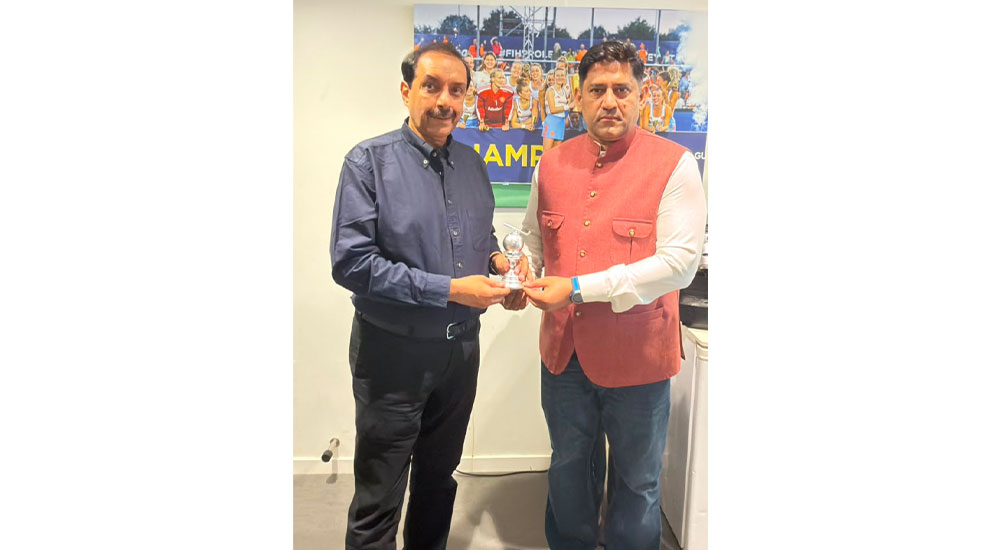
In every respect, the FIH Hockey World Cup 2026 was an excellent and outstanding tournament.
Question: Mr. Tayyab Ikram, you launched the FIH Pro League in 2019. There is a general perception that this initiative has limited the sport of hockey to just a handful of countries. What is your response to this criticism?
Answer: I completely reject this perception. The FIH Pro League is an excellent competition, and every sport has its elite level. However, we have also introduced the Nations Cup to provide more opportunities for other countries.
Now, I am preparing to launch its second edition. Seven editions of the Pro League have been held so far, giving 15 countries, including Pakistan, the opportunity to gain experience at this level.
At the international level, we believe in taking appropriate and effective measures to promote and develop the sport of hockey worldwide.
Question: Mr. Tayyab Ikram, you aspire to make hockey more popular globally. However, the sport continues to face major challenges in securing sponsorships and financial stability. France and New Zealand did not participate in the 2025–26 FIH Pro League due to a lack of funding. Did this create an opportunity for Pakistan to participate?
Answer: There is certainly some truth to what you have said. Hockey urgently needs stronger financial foundations and greater sponsorship support at the global level. We are working in this direction, although significant challenges remain.
In fact, France and New Zealand are relatively more financially stable in hockey than Pakistan. Nevertheless, they decided not to participate in the Pro League.
I am extremely grateful to the Government of Pakistan for considering our proposal and ensuring the national team’s participation in the Pro League. Admittedly, there were many challenges along the way, but it proved to be an excellent experience for Pakistan hockey and its players.
We have been working, and continue to work, to further strengthen the FIH’s financial position and organizational structure at the global level.
Question: Mr. Tayyab Ikram, Pakistan–India matches have proved to be highly lucrative for cricket at the ICC level. Why, then, is the FIH not capitalizing on the significance and commercial potential of Pakistan–India encounters in hockey?
Answer: That is a very timely and important question. It is not just the FIH; the Asian Hockey Federation also recognizes this reality.
The Pakistan–India match in Amstelveen attracted a full house. We understand the significance of this rivalry, and there is no reason why Pakistan and India should not play each other regularly in hockey.
However, you can appreciate that arranging bilateral contests between the two countries is not easy due to geopolitical circumstances.
Nevertheless, both the FIH and the Asian Hockey Federation want to capitalize on the importance and potential of this historic rivalry. We are working on plans to make that happen.
Question: In cricket, we see the ICC strengthening its financial position by capitalizing on Pakistan–India matches during major tournaments, including the ICC Cricket World Cup, held every four years, the Champions Trophy, and the T20 World Cup. Why is the FIH not pursuing a similar strategy?
Answer: Yes, that is a valid and important question. Alongside the Hockey World Cup, which is held every four years, we also regularly organize Pakistan–India encounters in hockey through tournaments such as the Asian Champions Trophy and the Asia Cup.
However, I believe there is still considerable scope for a more effective and financially integrated strategy in this regard. You will see positive developments on this front in the future.
Question: Mr. Tayyab Ikram, Pakistan is your homeland, and you began your journey in hockey here. However, Pakistan hockey is currently struggling with numerous problems and challenges. What is your perspective on the situation as President of the FIH?
Answer: Look, Pakistan hockey is facing countless problems, and I can understand the difficulties it is going through.
Recently, Pakistan’s hockey team played 18 matches in the Pro League, competing against some of the world’s top teams. Ideally, this experience should have helped Pakistan perform better at the World Cup. However, the team appeared to be well behind its competitors.
For Pakistan hockey to move forward, positive thinking and sound decision-making are essential. We have an optimistic outlook for the future in this regard.
The FIH remains committed to promoting and developing hockey in Pakistan and around the world, and we will continue working towards that goal.
Question: What are the chances of Pakistan’s hockey team participating in the 2026–27 FIH Pro League?
Answer: Pakistan finished at the bottom of the table in the previous edition. However, that does not mean Pakistan is now out of the Pro League permanently. It is possible that another country may withdraw from the competition, in which case we could send an invitation to the Pakistan Hockey Federation to participate in the FIH Pro League.
Question: The ICC, cricket’s global governing body, has 111 member countries, while FIFA, football’s world governing body, has 211 member associations. Could you tell us how many member countries the FIH has, as its president?
Answer: Hockey is played in more than 140 countries across five continents, and we remain in contact with these countries. However, if we are talking about countries that are actively involved in the sport, the number is between 70 and 80. The FIH also provides them with its full support.










COMMENTS